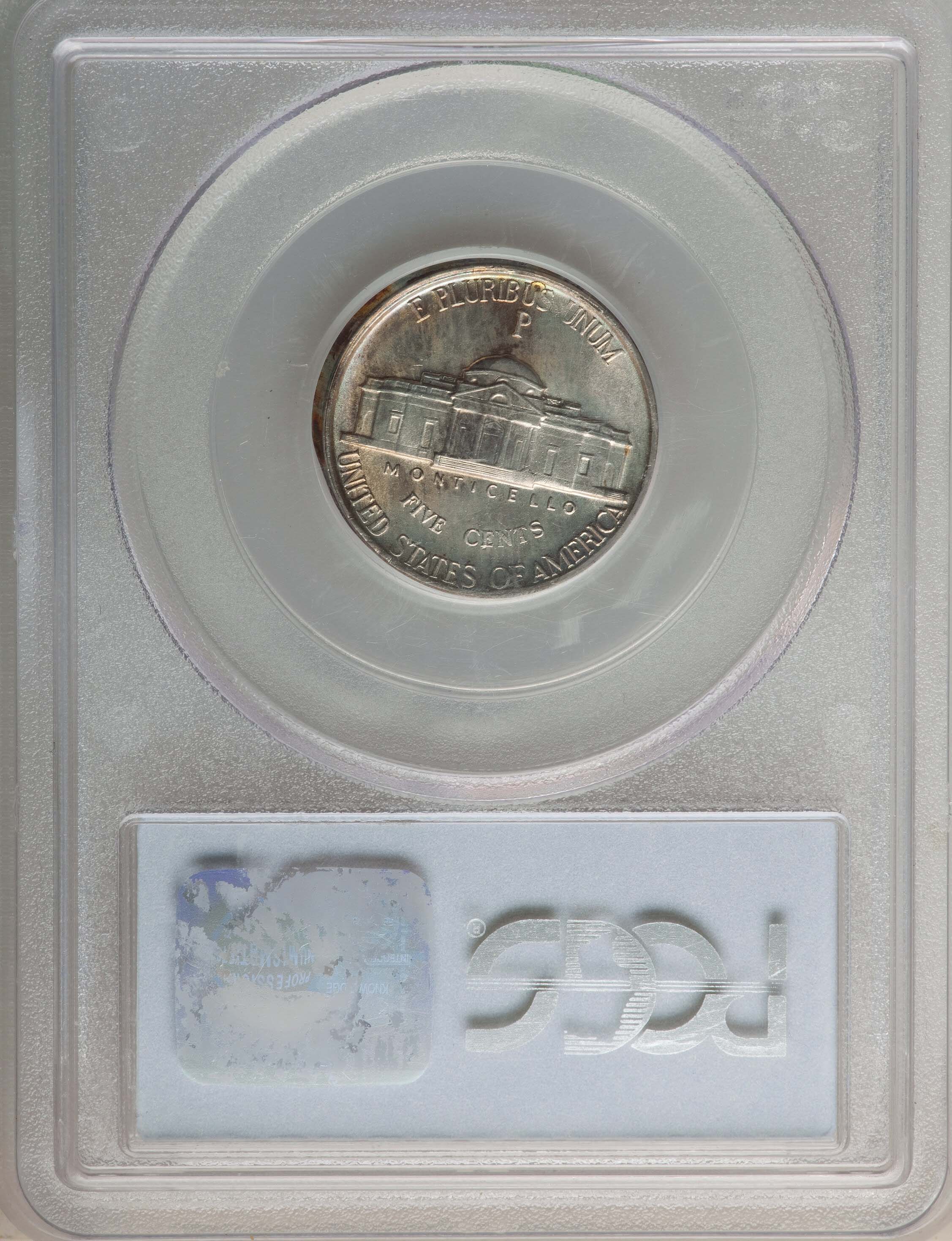
From time to time, an error coin featuring a relatively common error type becomes exceptional because of either the dramatic nature of the type, the host coin, or both. This is one of those moments.
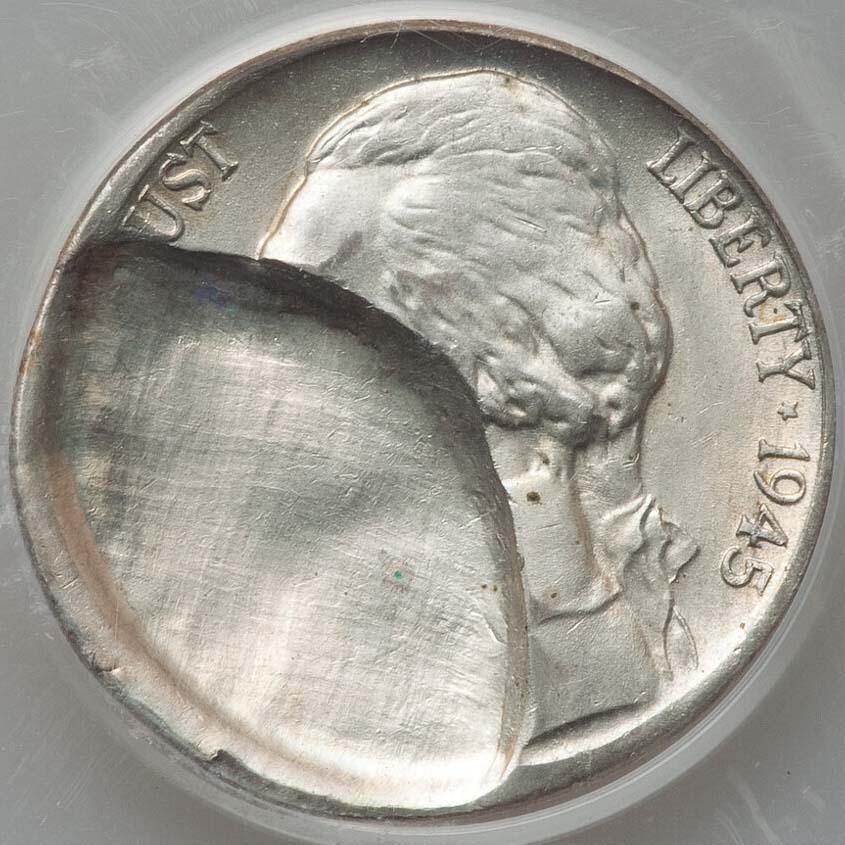
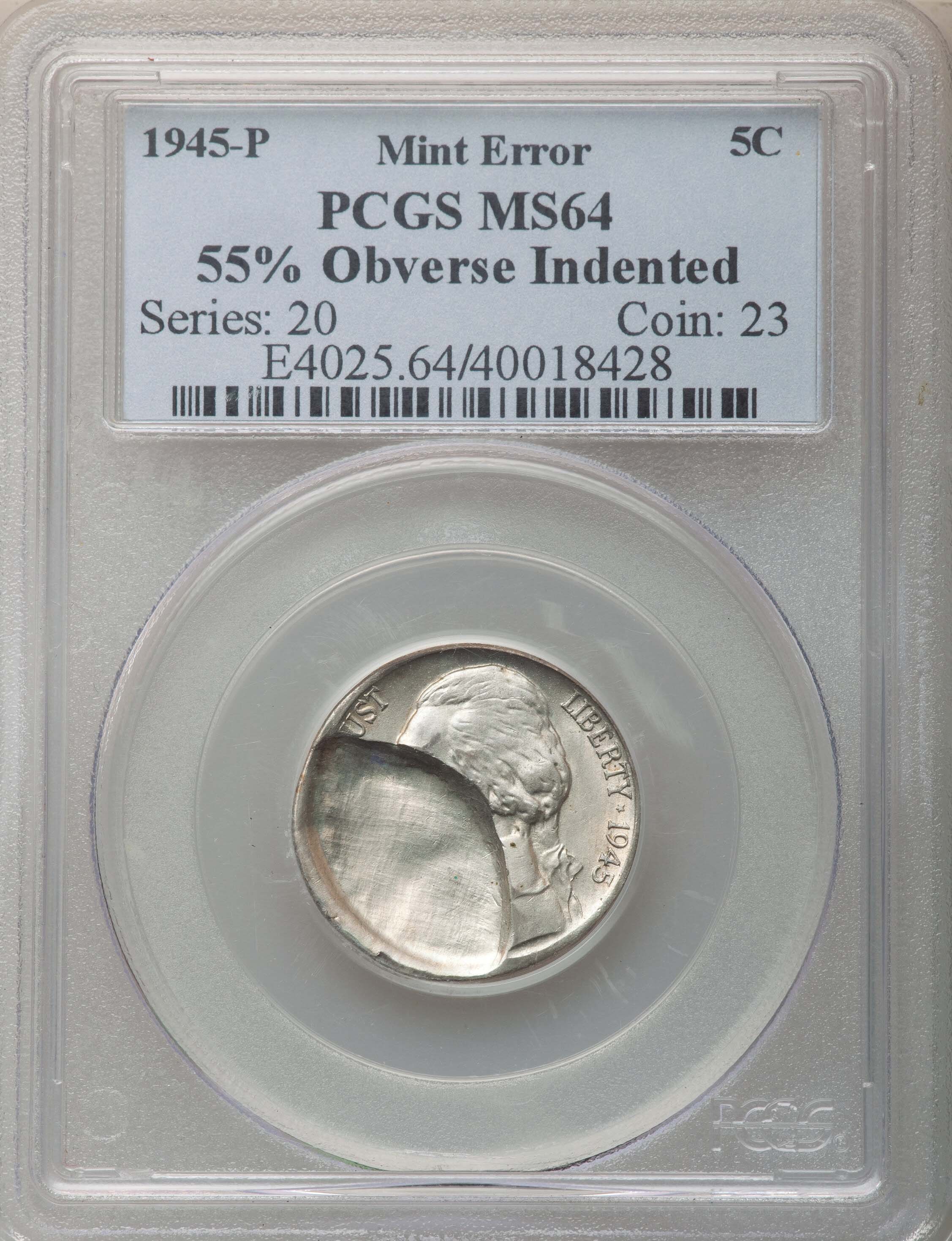
In this issue of Mint Error News. I want to feature this amazing 1945-P wartime silver Jefferson nickel with a 55% obverse indent. In a moment, I will explain what causes the indent. But for now, to start, I want to clarify that this is certainly one of the largest known indents on a wartime nickel. When combined with its exceptional grade (this, in my opinion, a slight undergrade as the coin in hand certainly looks MS65) the combination is undeniable.
This coin specifically has eye appeal, rarity, and is an exceptional example of an error type that is commonly seen though not as dramatically on a silver wartime nickel. In addition, an indent of such size and scope as is seen on the obverse of this coin is quite rare. To further understand how this error happens, imagine a planchet is between the dies and an additional blank planchet partially rests over this coin. When this pair of coins is struck by the dies, the part of that blank planchet which is obscuring the impact of the die on the obverse will end up being "indented" into the face of the coin. The rest of the obverse receives the direct blow of the dies, and thus we can see the detail here from the strike.
The area where the blank was overlapping does not show any die detail, because the die struck that overlapping planchet. Somewhere in the world, one would hope, there is a blank which was struck into a coin (this article's example) but essentially as an off-center piece. On this missing coin, one side has design detail that would fit perfectly here, like a puzzle piece, and the other side is blank "uniface," as we call it. I would love for the second part of this pair to exist (and for it to make its way to me!) but perhaps it was caught at the mint in 1945 and melted down, as it technically should have been.
People often confuse indents and brockages. If the overlapping coin is a previously struck coin, rather than a blank piece, then detail from that previously struck coin will be incuse (seen in reverse) in what is here the blank area on the obverse of the coin. This is because the design detail from that previously struck coin is pressed into the surface of this coin when the two are struck together. Basically, we can remember that if there's design detail in the area of the coin that is seemingly unstruck by the dies, then it is a brockage, if it is not, as is the case here, it is an indent. You can find indents and brockages (both partial and full brockages obscuring the entire surface of a coin, on almost every known series.
In this case, the exceptional eye appeal and rarity of this coin comes from the dramatic size of the indent and also the fact that it is on a host coin that only appeared for four years in a silver type. Until next time, keep your eyes open for eye appeal and rarity and condition combining, because to spend more on something extraordinary will always pay off in the long run, if not financially, then certainly in the satisfaction of owning something extraordinary that you can share with others.
If you have questions about this piece, or would like to share exciting rarities of your own whether for sale or just for show, please be in touch anytime at minterrors@gmail.com.