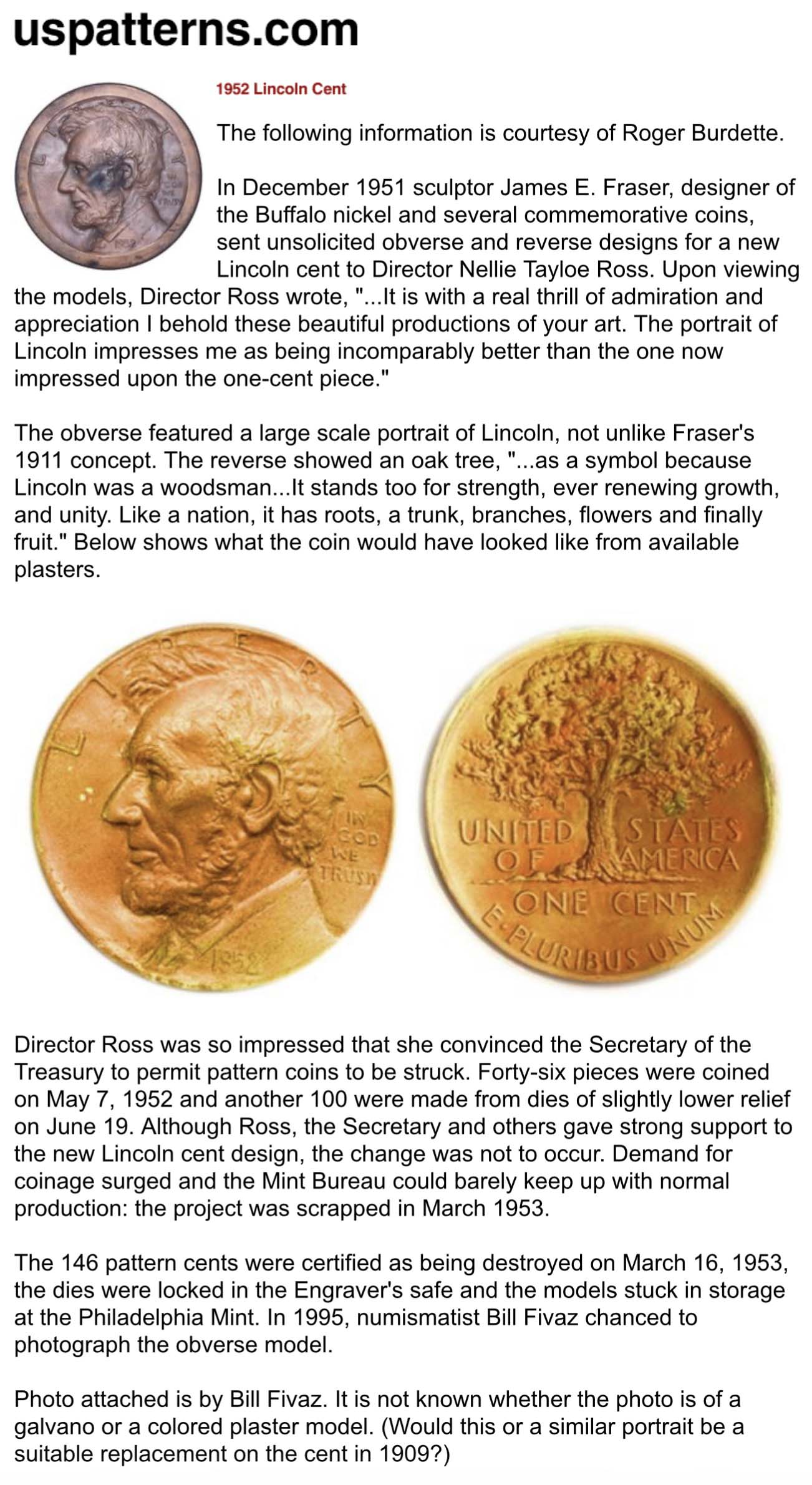
Renowned sculptor James Earle Fraser, designer of the Buffalo nickel and many commemorative coins, submitted unsolicited obverse and reverse designs for a new Lincoln cent to U.S. Mint Director Nellie Tayloe Ross in December 1951. After viewing both plaster models, Director Ross wrote,
"...It is with a real thrill of admiration and appreciation I behold these beautiful productions of your art. The portrait of Lincoln impresses me as being incomparably better than the one now impressed upon the one-cent piece."
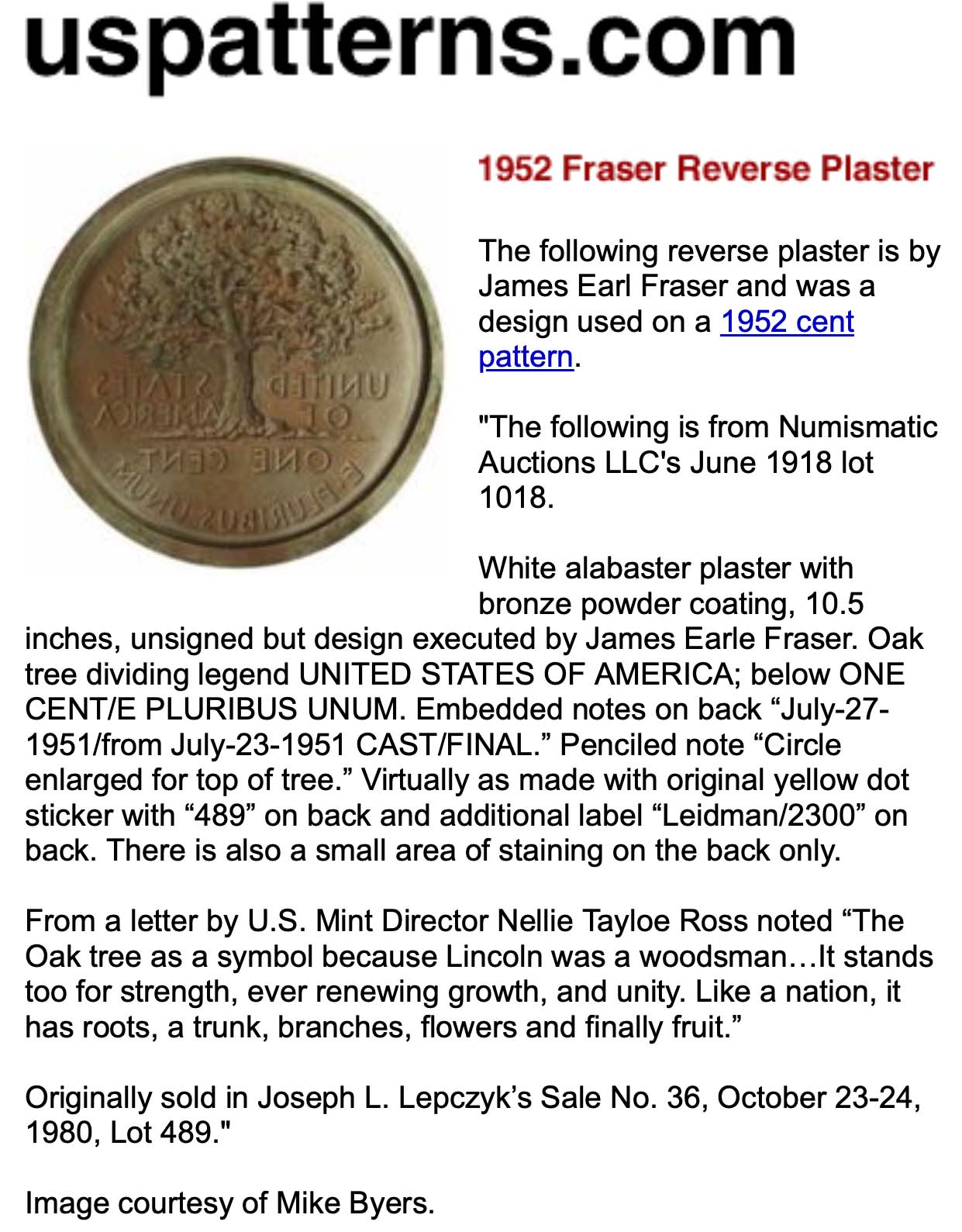
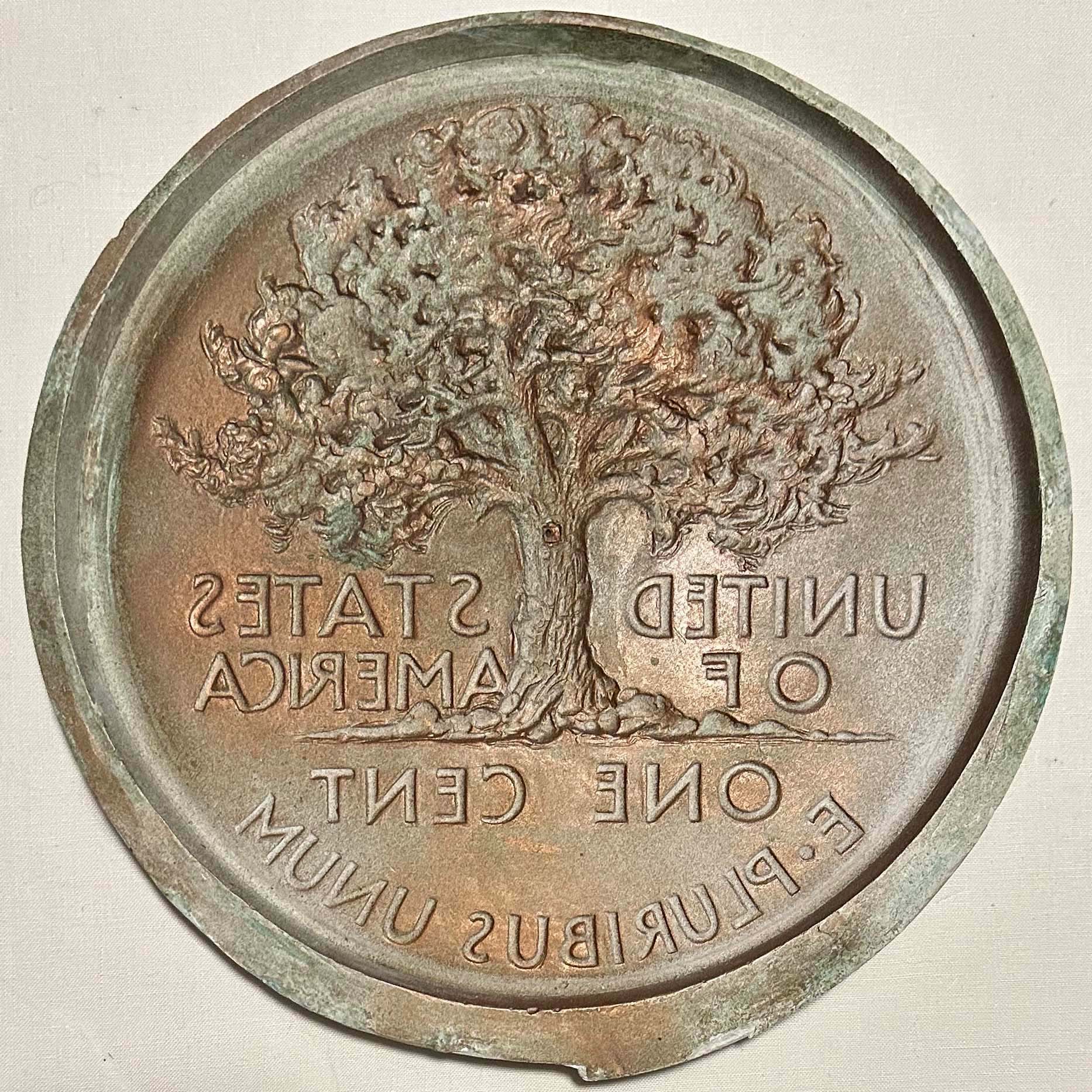
The obverse depicts a large portrait of President Lincoln, similar to Fraser's 1911 design, and the reverse depicts an oak tree. An oak tree had only been featured on one U.S. coin, the 1935 Connecticut Tercentenary half dollar. In a letter by Director Ross, she noted:
"The Oak tree as a symbol because Lincoln was a woodsman... It stands too for strength, ever renewing growth, and unity. Like a nation, it has roots, a trunk, branches, flowers and finally fruit."
Director Ross convinced the Secretary of the Treasury to strike pattern coins with Fraser's designs. Forty-six pattern coins were struck on May 7, 1952 and another 100 were struck on June 19th, using modified dies which had a slightly lower relief. Despite support and enthusiasm for this new Lincoln cent design, the change was not implemented.
The project was canceled in March 1953. The 146 pattern cents were certified as being destroyed on March 16, 1953, the dies were locked in the Engraver's safe and the plaster models placed in storage at the Philadelphia Mint.
In 1995, numismatist Bill Fivaz photographed the obverse design but it is unclear whether it was a galvano or plaster model.
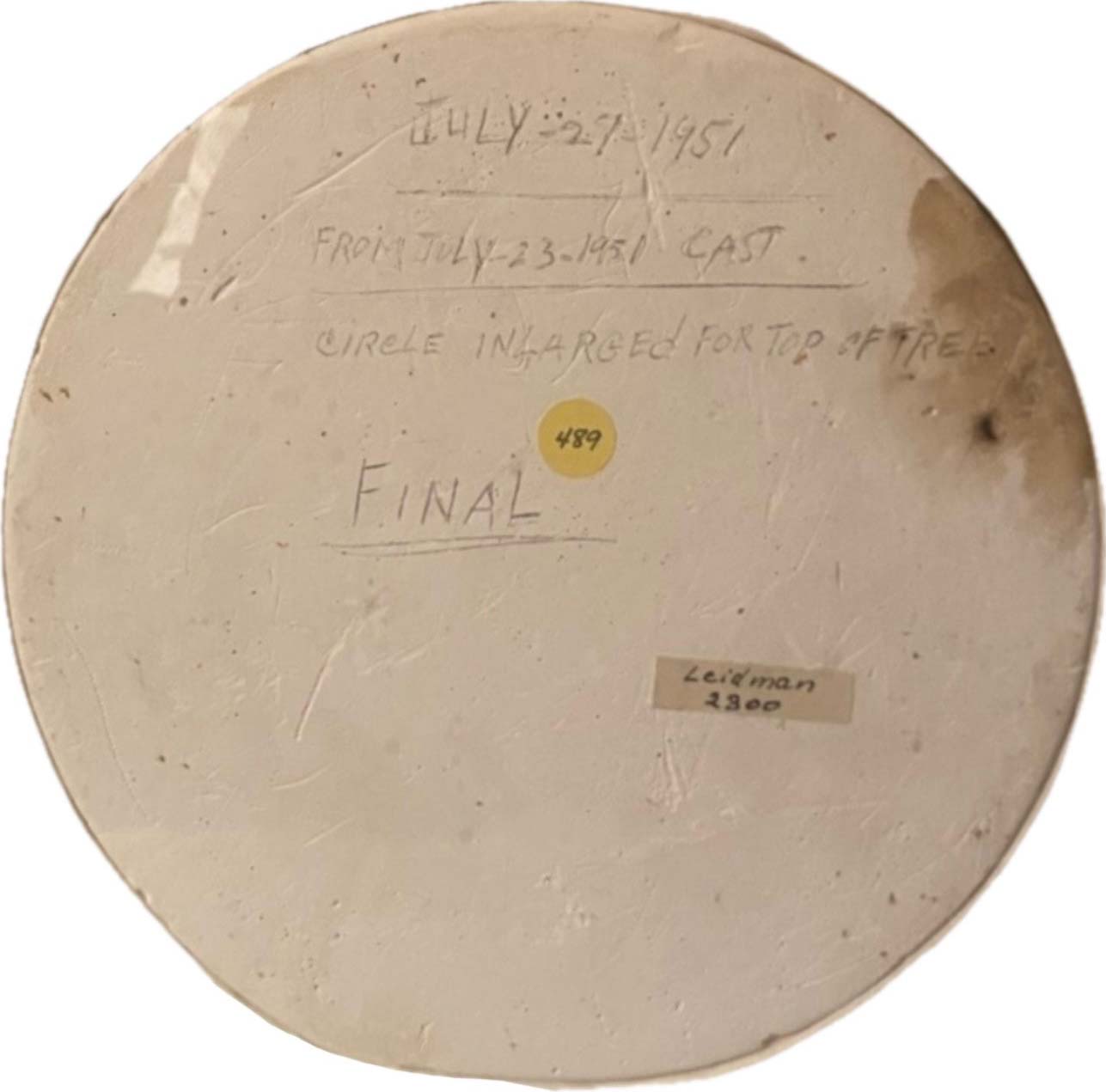
This reverse is a 10½" negative plaster model. Throughout its 75 year history, it has been preserved in excellent condition. It is a white alabaster plaster with bronze and green powder coating. The back of the plaster has notations indicating that it was made on July 27, 1951 from a July 23, 1951 cast and designated as the FINAL model.
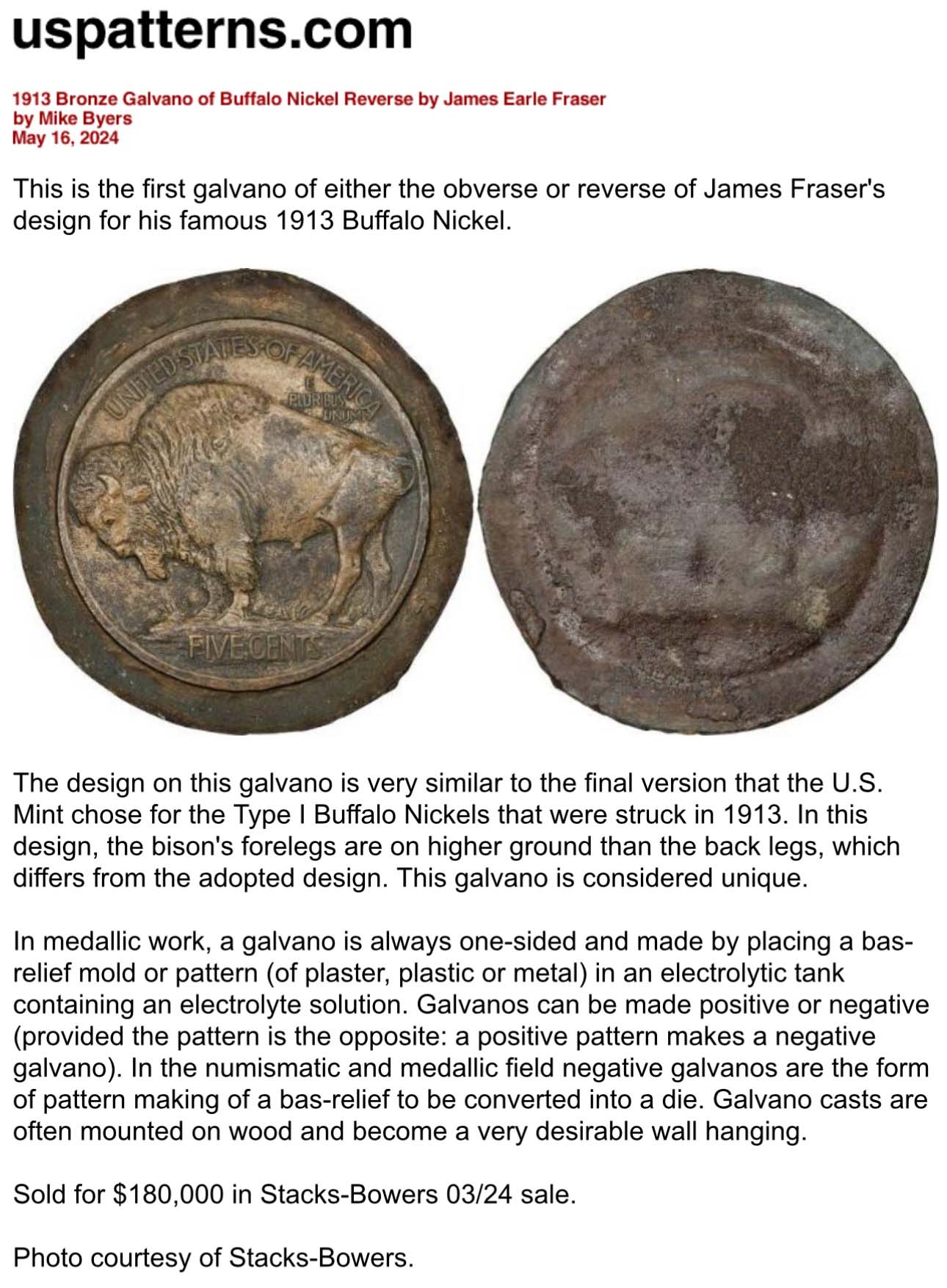
Prices for plaster models and galvanos have increased significantly in the last few years due to their popularity and rarity. Several examples that have set record prices are the Buffalo Nickel galvano that sold for $180,000 in a Stack's Bowers auction, the 1921 Peace Dollar bronze cast of the reverse sold for $132,000 in a Heritage auction, and a set of Long Island Half Dollar plaster & galvanos sold for $63,000 in a Heritage auction.
This 1952 Cent Pattern plaster model is considered unique in private hands and belongs in a museum or private collection of James Earle Fraser coin designs.
Pedigree: The Fraser Estate; Joseph L. Lepczyk's Sale (No. 36, October 23-24, 1980, Lot 489); Numismatic Auctions LLC (June 2018 Sale #62, lot 1018); Private Collection; Andy Lustig; Mike Byers.
Stack's Bowers sold this Bronze Galvano of James Earle Fraser's Buffalo Nickel Reverse on March 26, 2024 for a record price of $180,000 (lot 4046).
 |