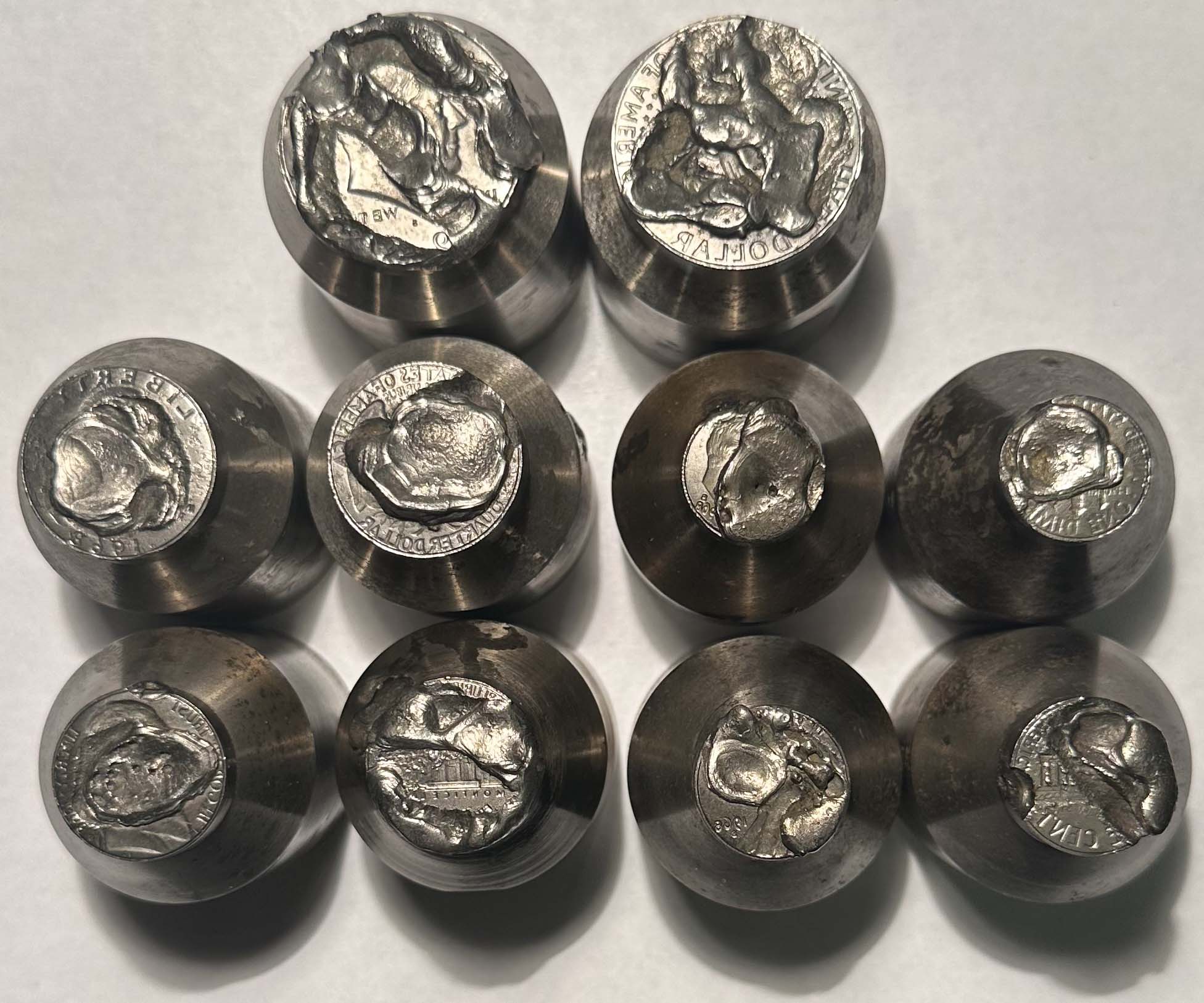
This set of ten cancelled dies shows the most detail of any known cancelled (torched) U.S. coin dies. Occasionally a torched U.S. proof die dated 1968-S surfaces with a very small amount of detail remaining on the die. To have a set of five different denominations of obverse and reverse torched dies with this much detail remaining is a unique discovery.
Dies were not produced in San Francisco. Rather, they were produced at the Philadelphia Mint and then were shipped to San Francisco where mint marks were applied by hand. After being cancelled by the U.S. Mint in San Francisco, they were sold as scrap. In the past, the U.S. Mint has auctioned mint machinery, cancelled dies, and parts of the coin press and equipment. In some cases, private companies were contracted to destroy this scrap. The General Services Administration (GSA) sold dies as scrap as well.
In 1968, the GSA sold approximately 4,500 cancelled dies that were torched. This created a media frenzy regarding the sale of U.S. coin dies and the legality of the sale.
In a Department of the Treasury letter written in 1973, Mary Brooks, the Director of the Mint, describes in detail the sale and destruction of defaced U.S. coin dies:
"In late 1968, mutilated die bodies, remaining from the defacement and destruction of worn or otherwise retired dies at the San Francisco Mint, were included in scrap steel sold by the Mint through the General Services Administration.
GSA sold it at a public sale. A West Coast scrap metal dealer purchased it, and in turn sold the included mutilated die bodies to a West Coast coin dealer.
In turn, that dealer is said to have sold some of the mutilated die bodies to other dealers throughout the United States. Apparently the advertisement you cite is for some of those items.
When the items were first offered for sale to individuals in San Francisco in January 1969, the matter was investigated by the Department. The scrap steel die bodies were examined by a Treasury representative, who concluded that each of them had been defaced and destroyed and that none were usable for stamping coins. The scrap metal die bodies had been mutilated to such an extent (by grinding off and then puddling with a welder's torch) that private possession of them presented no threat to the Treasury's responsible interest in the matter--the detection and suppression of counterfeiting. Since this occurrence, regulations provide that the scrap steel remaining from die destruction be delivered under security into a steel melting furnace and there melted."
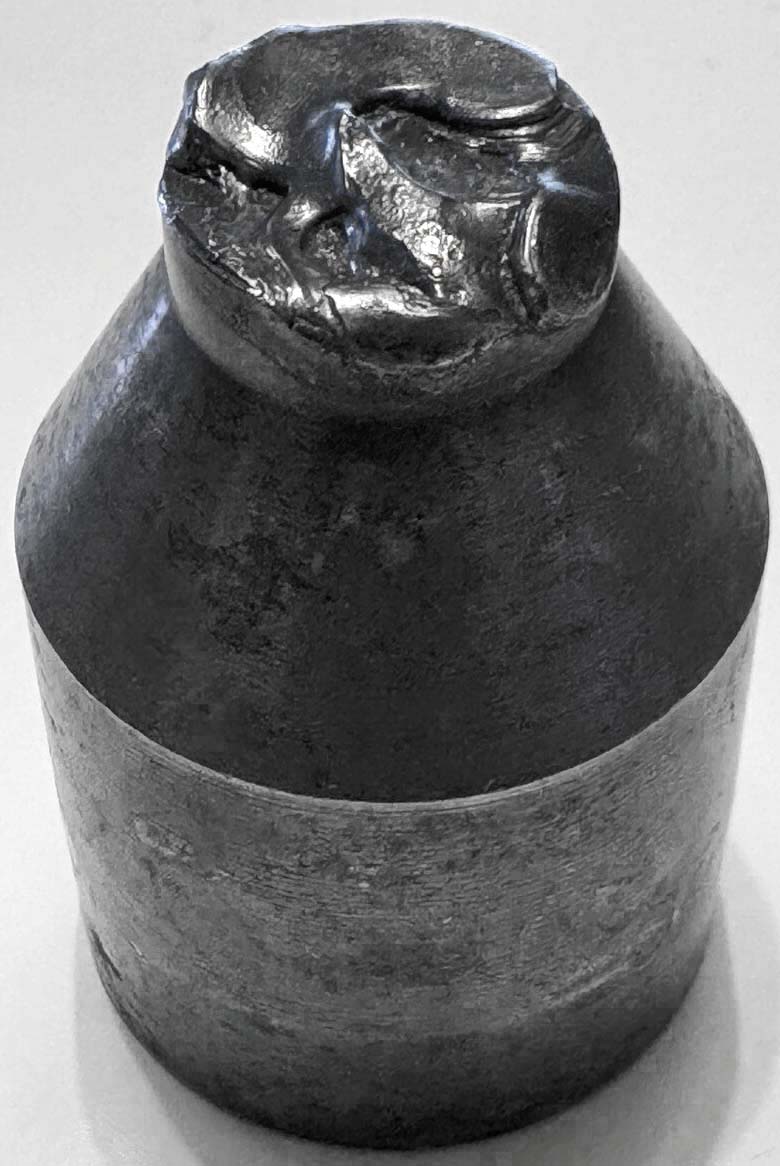
In this group of approximately 4,500 defaced dies that were torched, almost every die was 100% defaced with no visible detail remaining on the face of the die. There was a small group that still showed a small amount of detail remaining, such as a few letters, partial date or a very small amount of a portrait or building. Even rarer were a few dies showing considerable amount of detail remaining.
This GSA sale consisted of four different groups of defaced dies:
- An extremely small number of Lincoln cent dies that struck Wheat Ear cents in San Francisco ending in 1955. Very little information is available on these rare Wheat Ear dies. A few had the slightest design showing a wheat ear and/ or partial letters. The design and placement of the letters of E PLURIBUS UNUM, ONE CENT and UNITED STATES OF AMERICA made it easy to identify the small amount of design left on the Wheat Ear dies. The rest of this very small group were 100% torched and only identifiable by the placement of the die numbers on the side of the shank. These did not have an S in front of the die number.
- An extremely small number of 1968-S dies that struck circulation coins. Once again, a few had a small amount of detail, the rest were 100% torched. These were identifiable by an S on the side of the shank followed by the die number.
- An extremely small number of 1969-S dies that struck proof coins. Once again, a few had a small amount of detail, the rest were 100% torched. These are identifiable by a S for San Francisco, followed by the die number and then P for proof.
- The vast majority (almost all) of the defaced dies were PROOF dies from 1968-S, of each denomination, and were torched completely with no design visible. Once again, a few had a very small part of the original design visible such as a partial date, a few letters or a very small amount of a portrait or building.
In 1974, New England Rare Coin Galleries handled a huge number of the 1968-S torched proof dies and sold them to retail collectors. The dies included a letter from New England Rare Coin Galleries dated April 26, 1974.
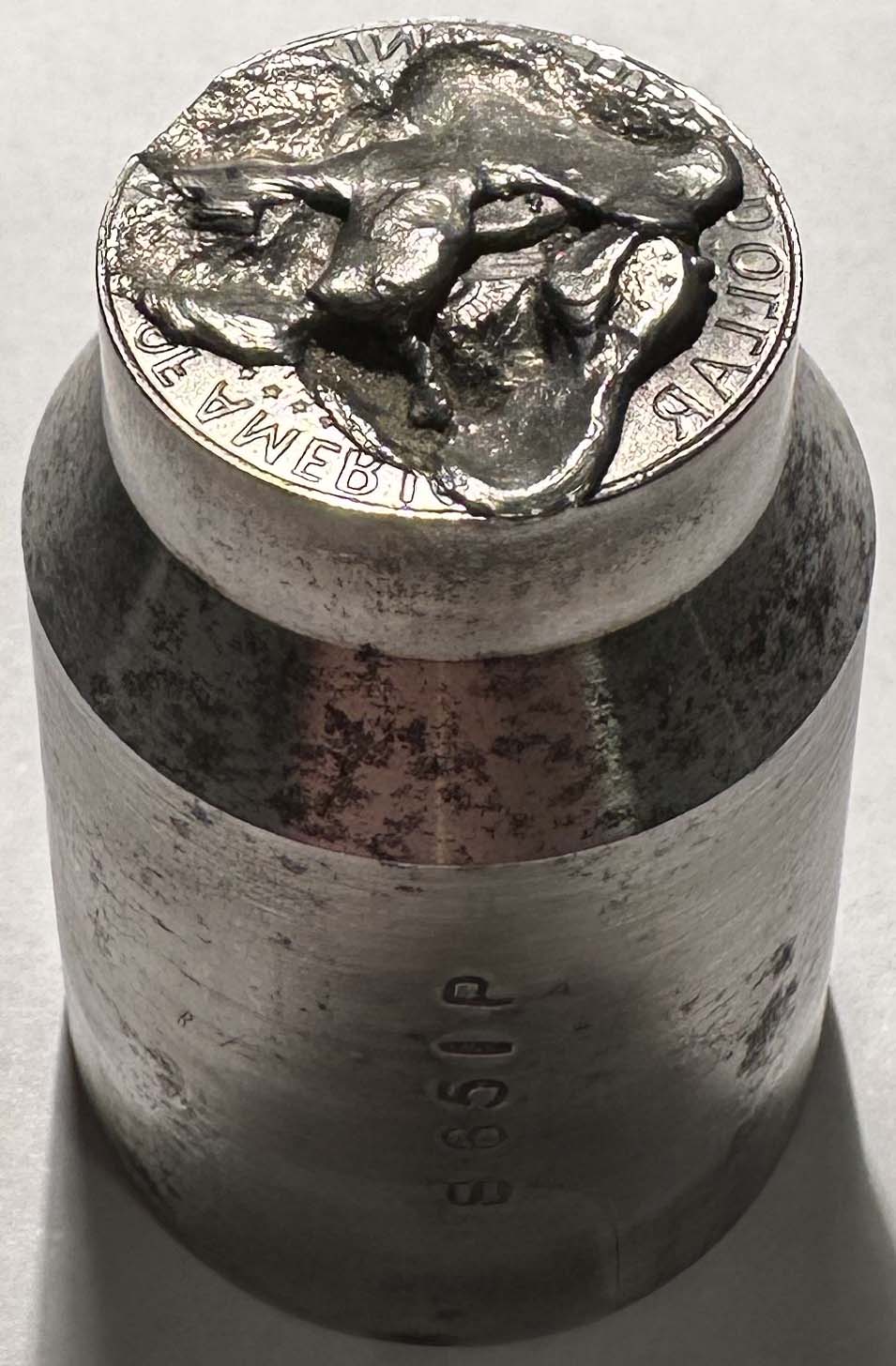
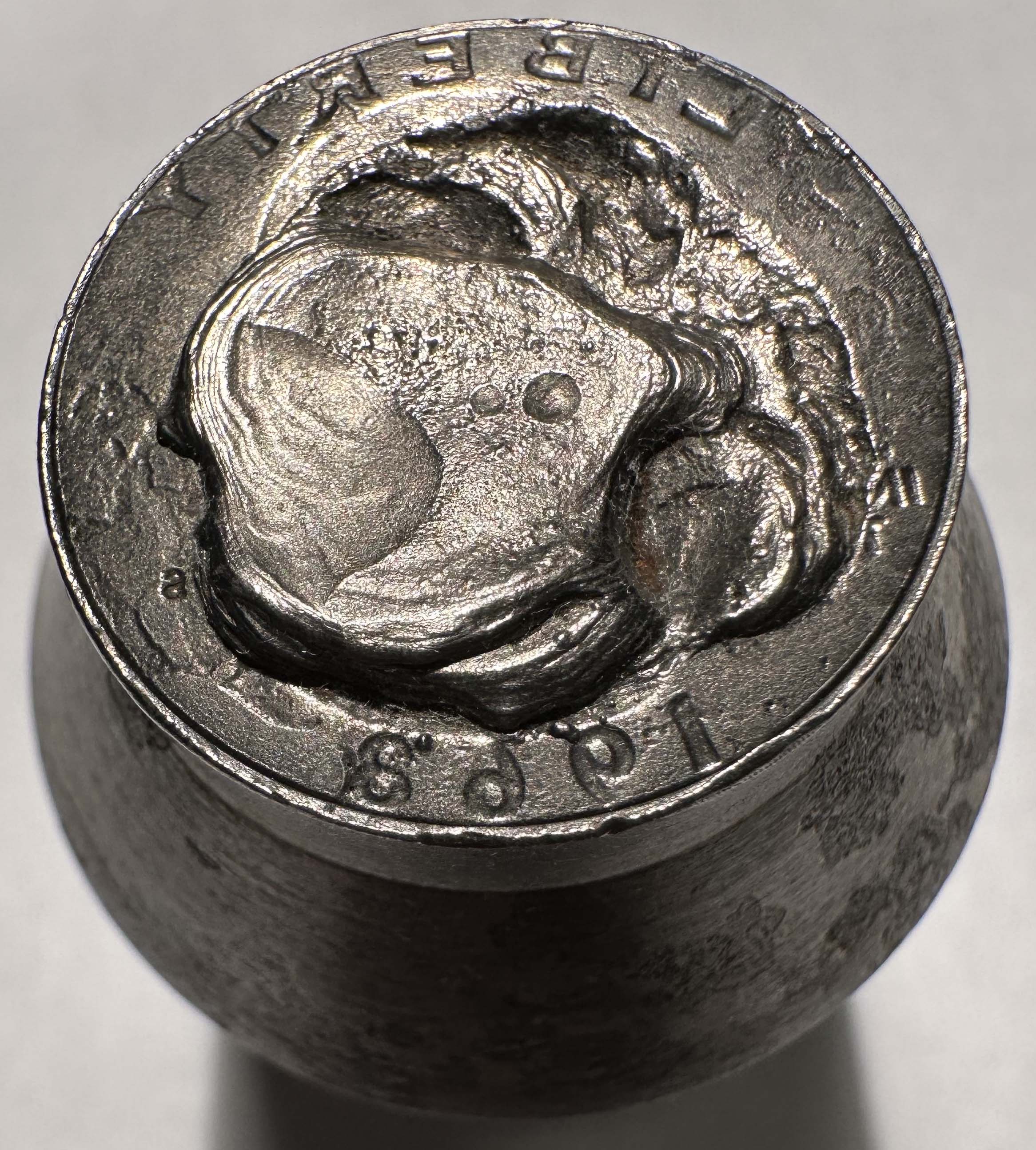
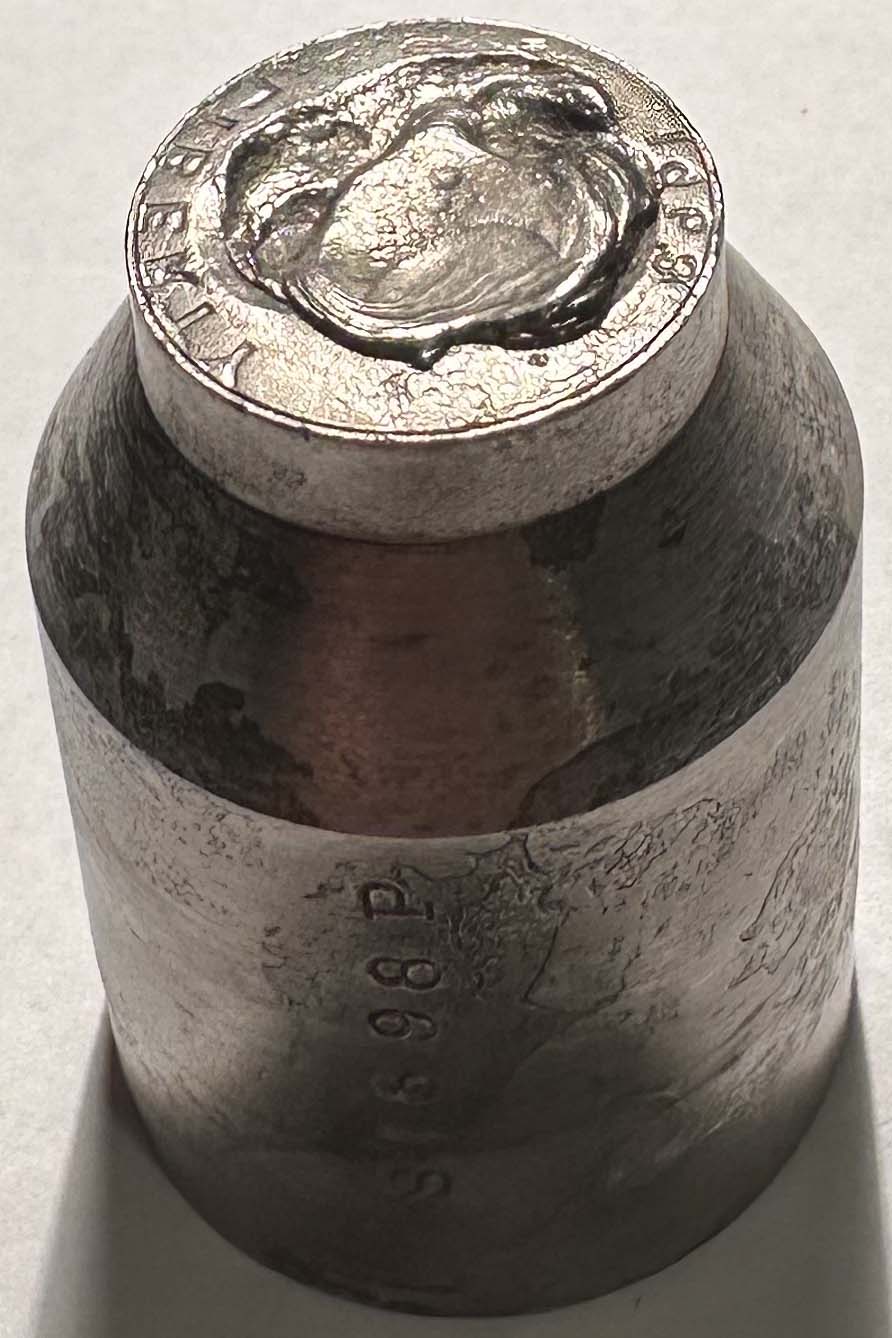
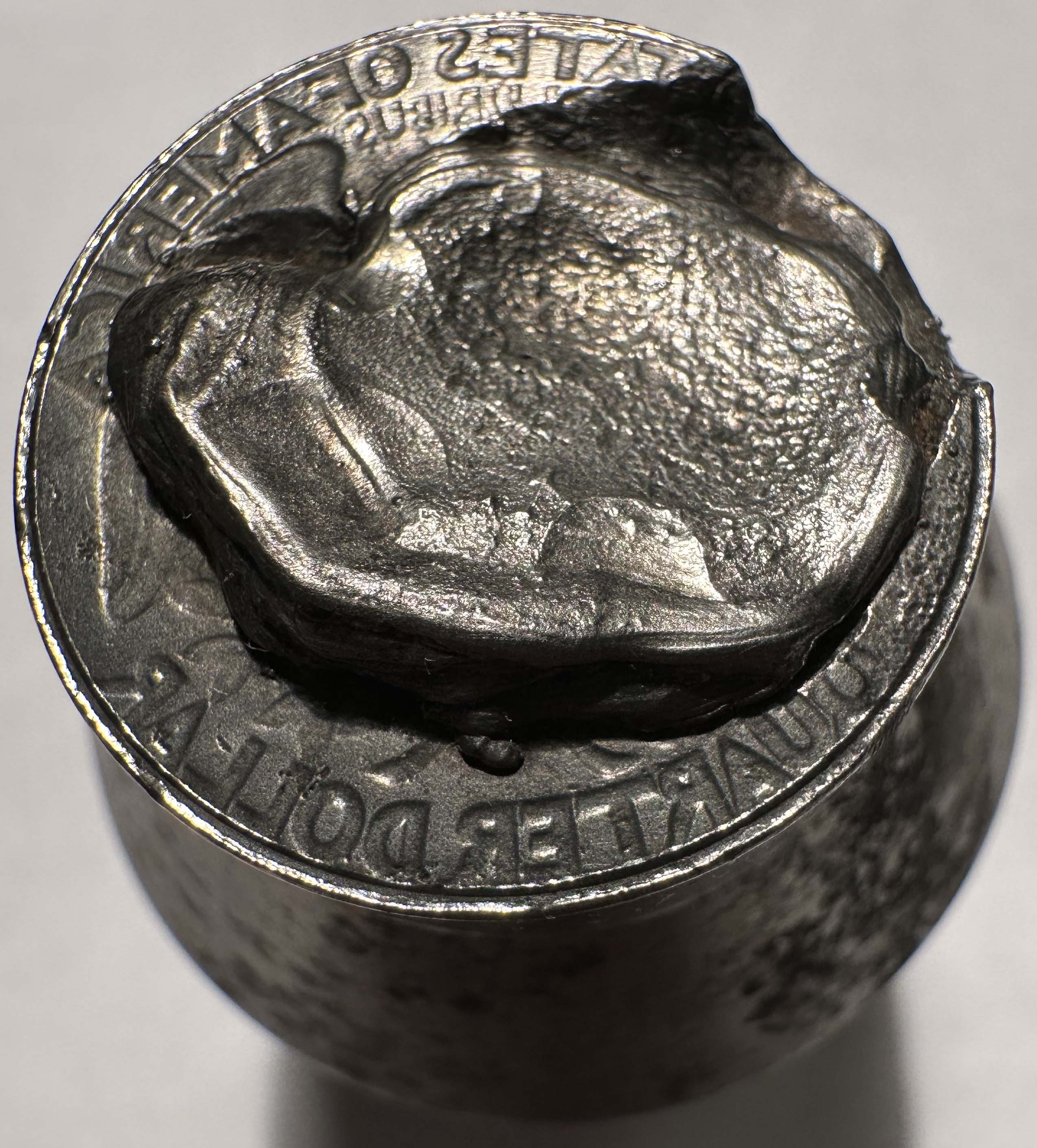
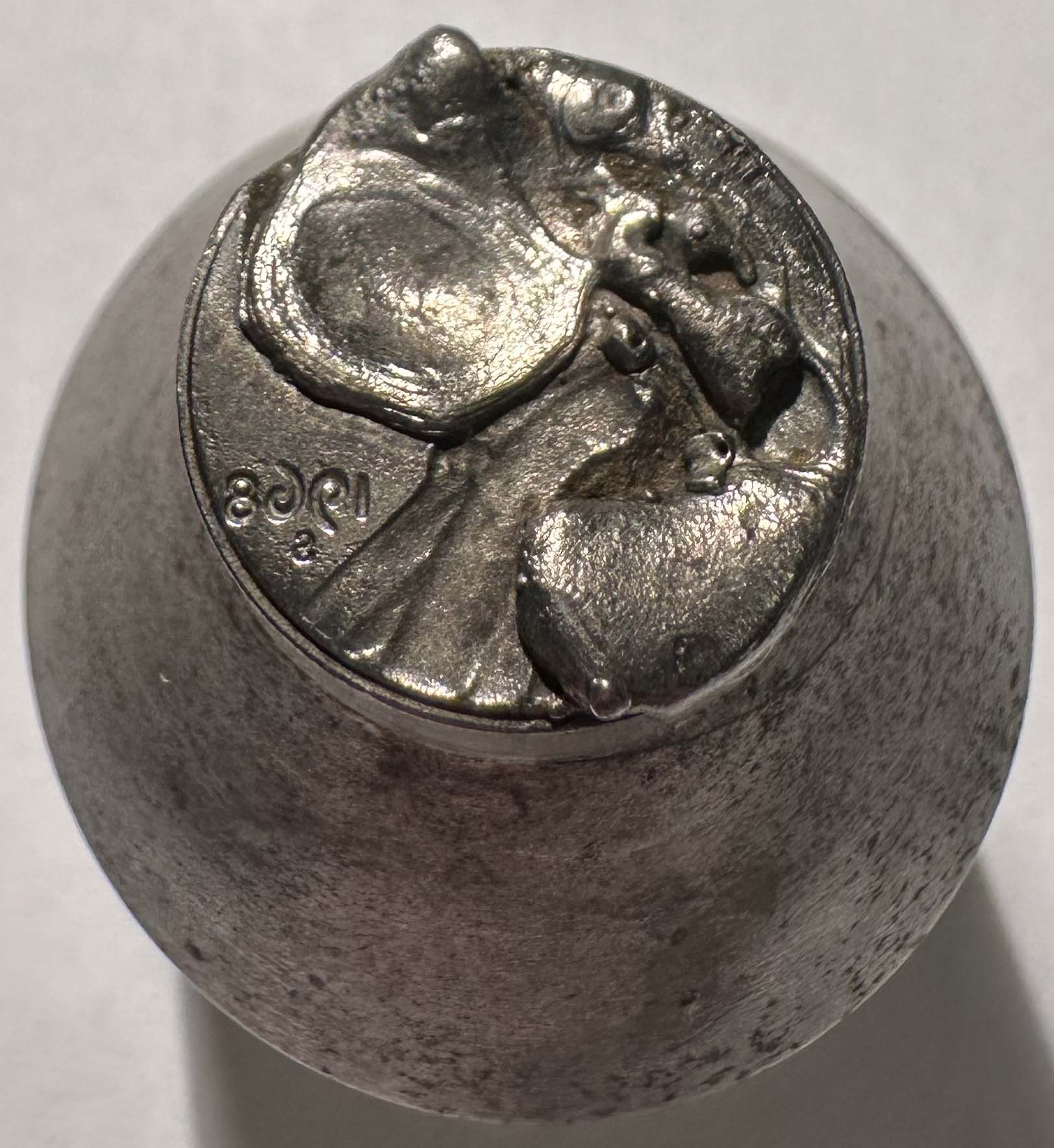
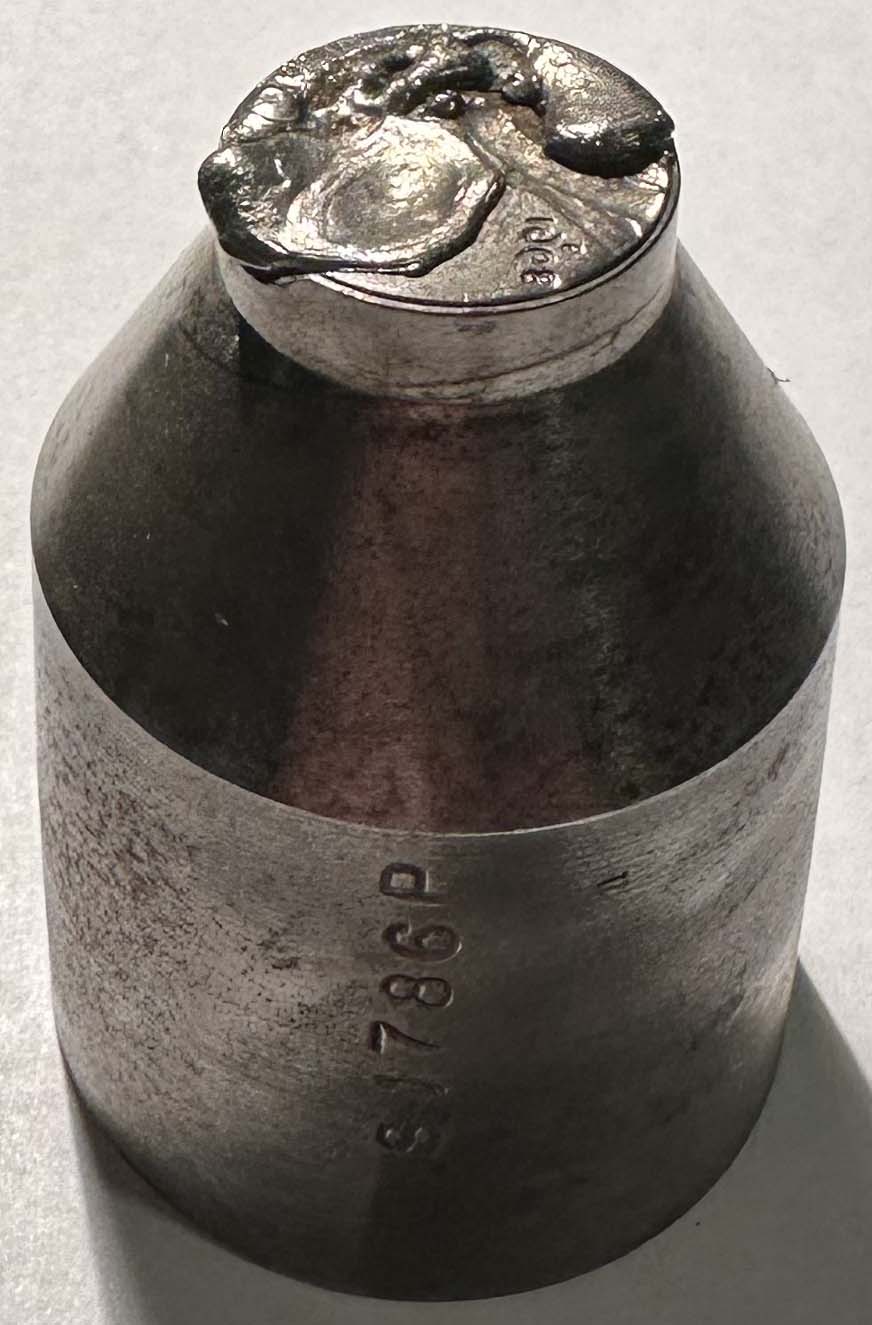
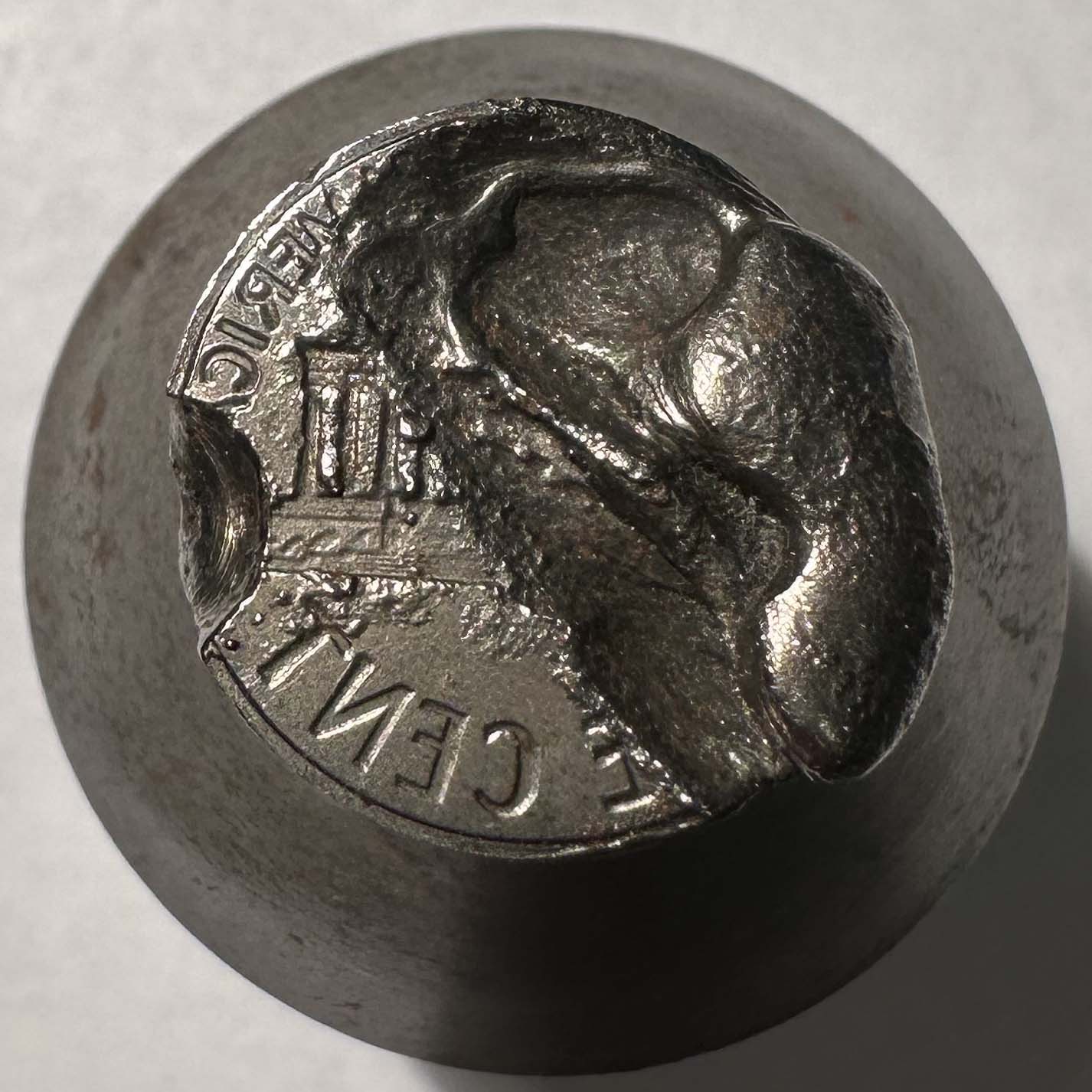
This set of 1968-S proof 50¢, 25¢, 10¢, 5¢ & 1¢ dies is in excellent condition considering the fact that they were sold as scrap almost 60 years ago by the U.S. Government. Here is breakdown of the detail that is visible on each die:
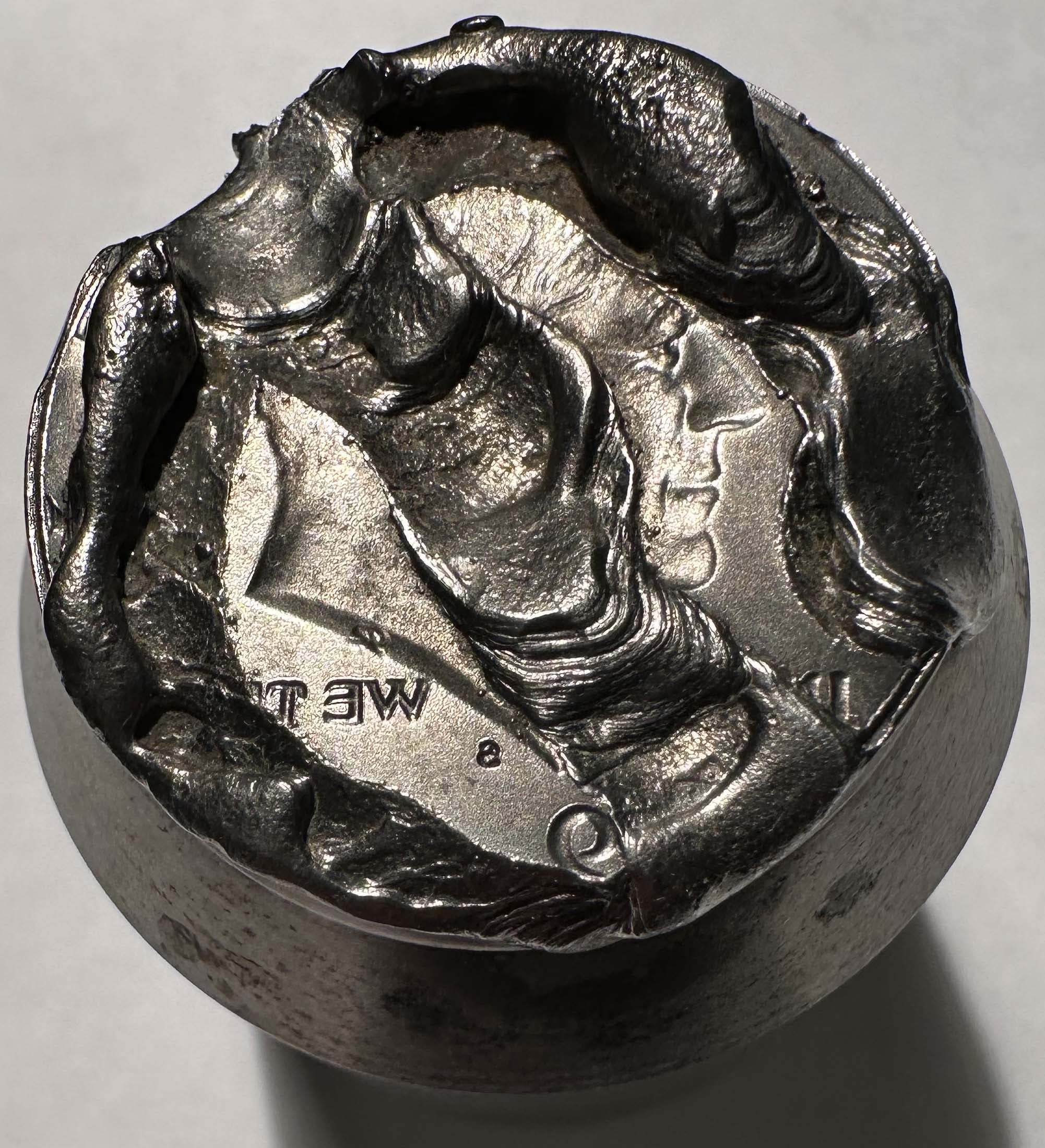
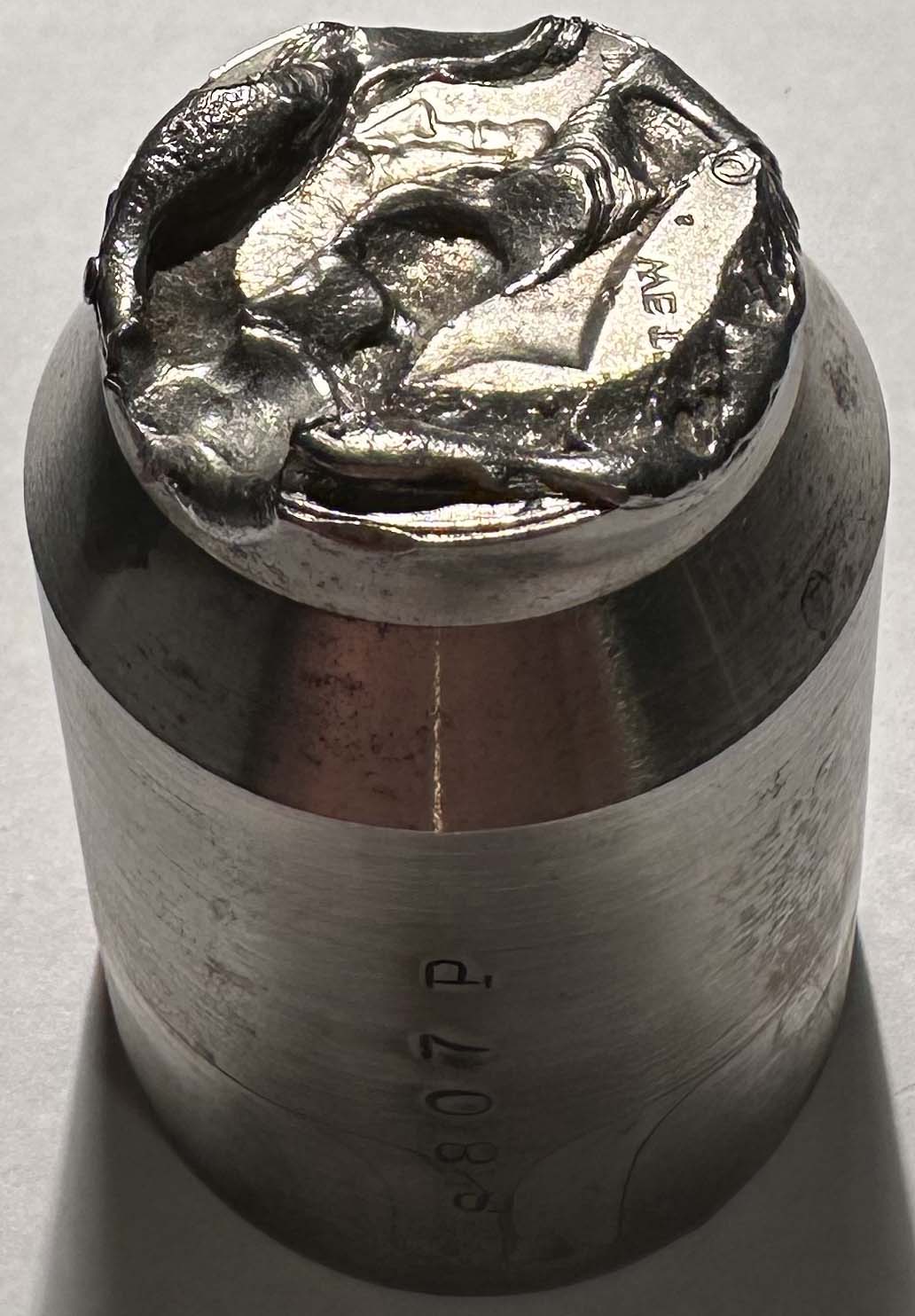
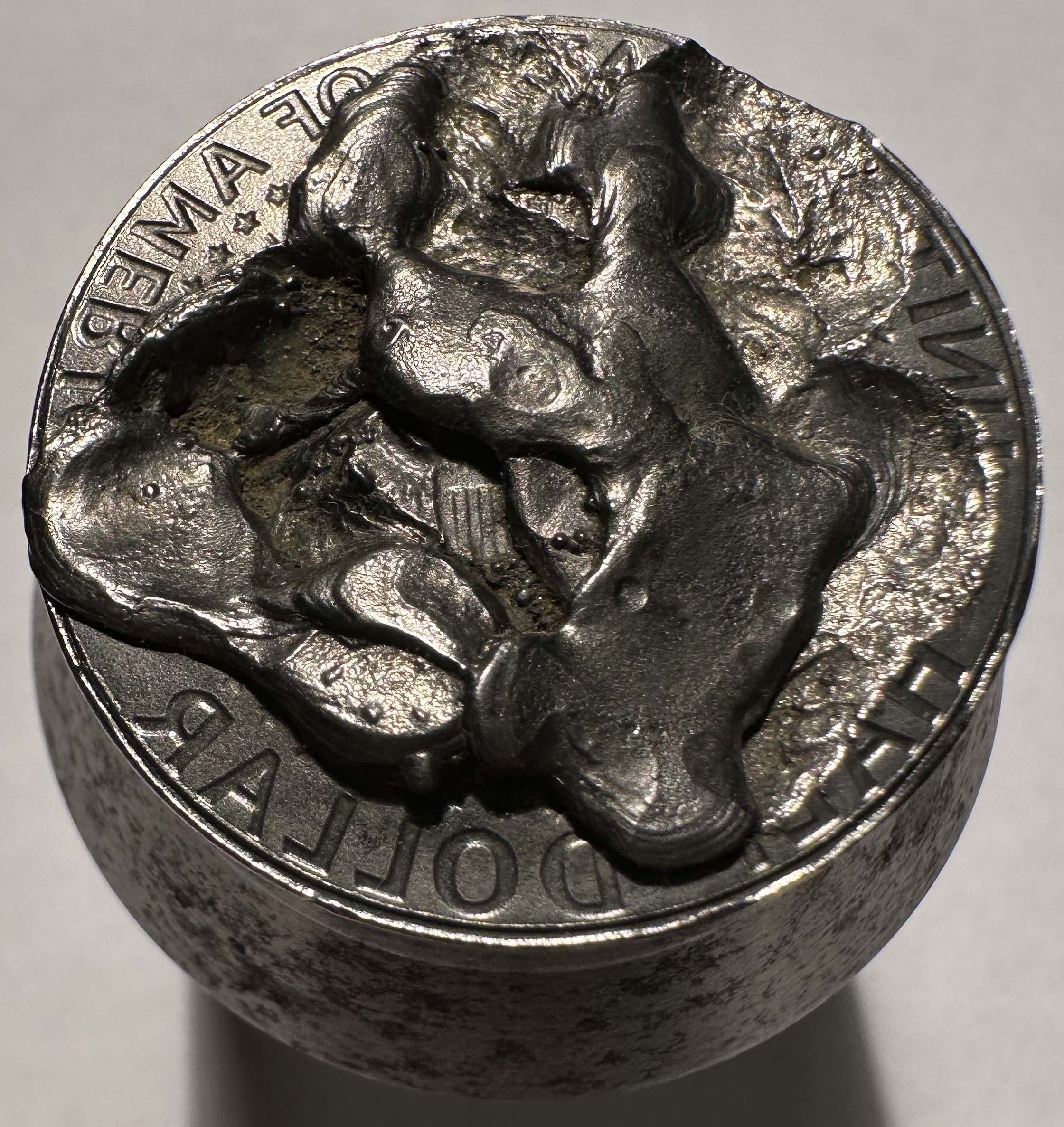
The Kennedy half obverse and reverse cancelled dies are the rarest denomination of torched proof dies that were included in the GSA sale. The half dollar obverse die shows approximately 20% of the design remaining, including Kennedy's portrait and part of IN GOD WE TRUST and part of the date. The half dollar reverse die shows approximately 25% of the design remaining, including part of UNITED, OF AMERICA, HALF DOLLAR and part of the eagle.
The quarter obverse die shows approximately 40% of the design remaining, including LIBERTY, the full date and mint mark. The quarter reverse die shows approximately 35% of the design remaining, including part of STATES OF AMERICA, PLURIBUS, QUARTER DOLLAR and part of the eagle's wing.
The dime obverse die shows approximately 30% of the design remaining, including Roosevelt's portrait, the 968 of the date and S mint mark. The dime reverse die shows approximately 50% of the design remaining, including UNITED STATES, ONE DIME, part of E PLURIBUS UNUM and part of the torch.
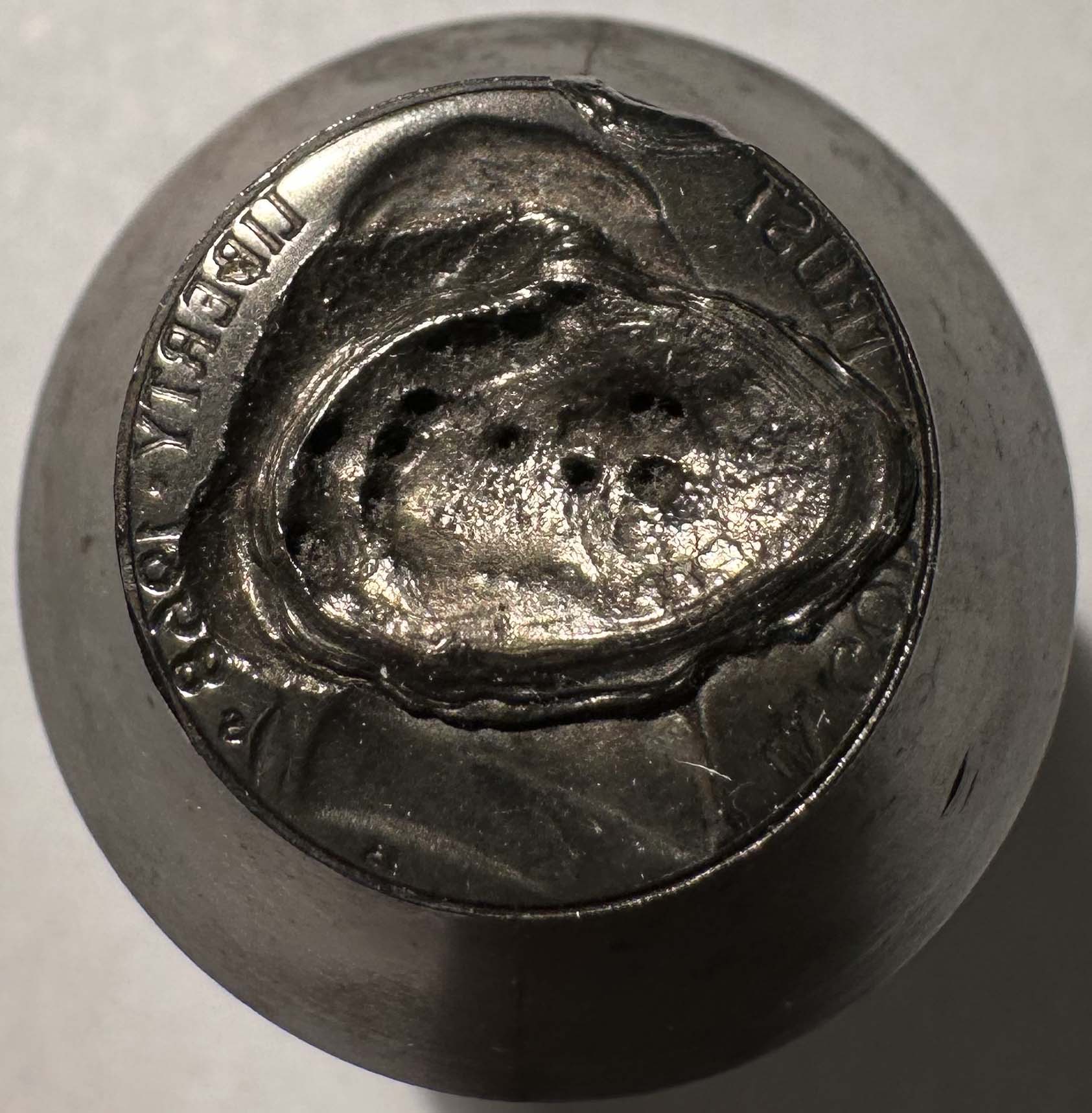
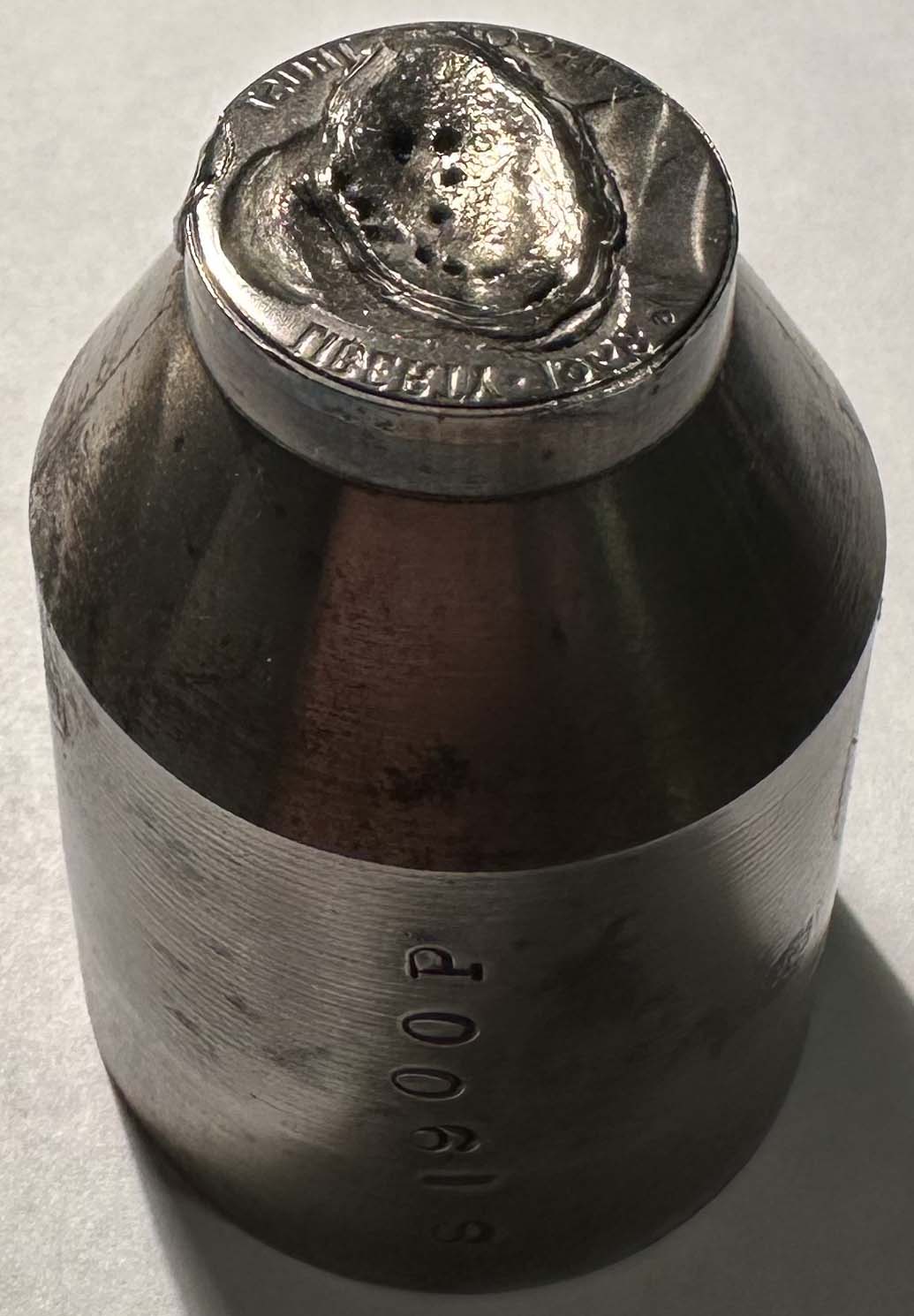
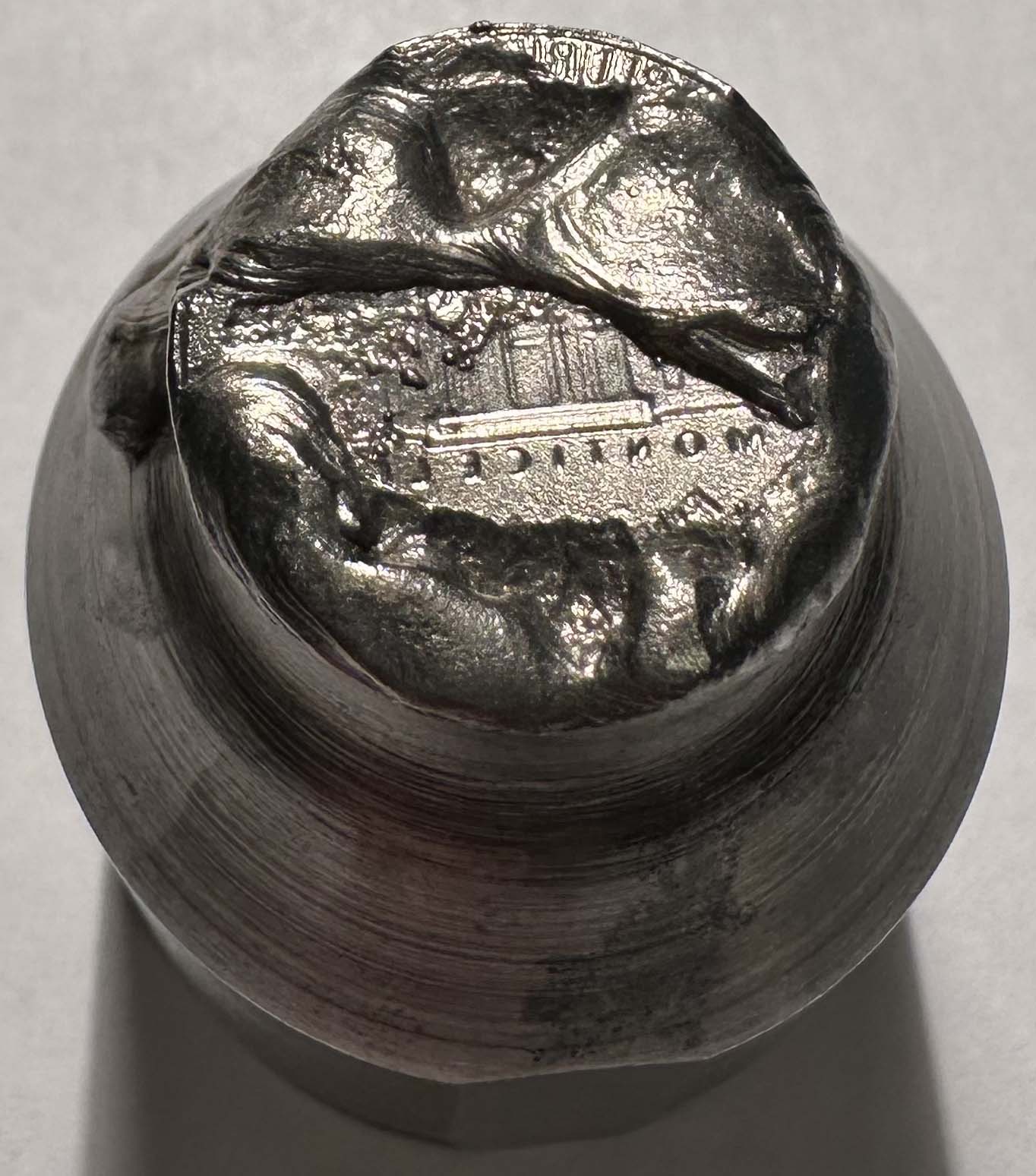
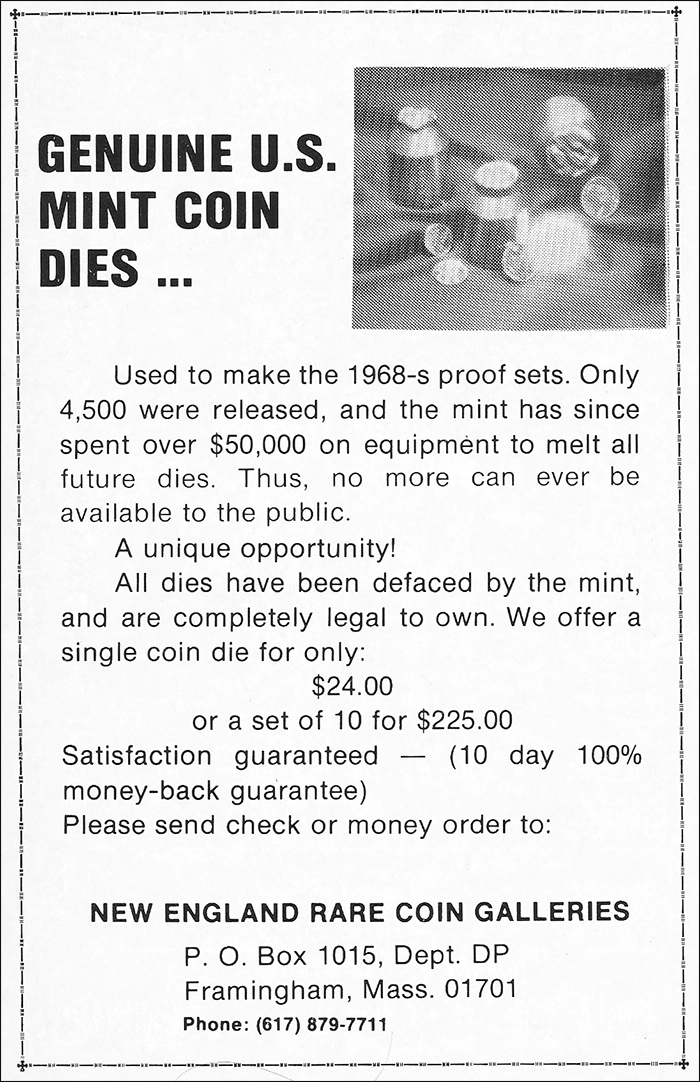
The nickel obverse die shows approximately 50% of the design remaining, with the torching cancelling only the center part of the design. IN GOD WE TRUST, LIBERTY, the full 1968 date and S mint mark, and part of the portrait are still visible. The nickel reverse die shows approximately 25% of the design remaining, including part of E PLURIBUS, most of MONTICELLO and part of the Monticello building.
The cent obverse die shows approximately 25% of the design remaining, including part of the portrait, IN GOD WE TRUST, the full date and mint mark. The cent reverse die shows approximately 35% of the design remaining, including the E and CENT, part of the memorial building, and AMERICA.
This amazing set of 1968-S proof dies, cancelled but just partially torched, belongs in a significant collection of U.S. coins, dies or major mint errors.
1968-S Kennedy Half Dollar Obverse & Reverse Dies:
1968-S Washington Quarter Obverse & Reverse Dies:
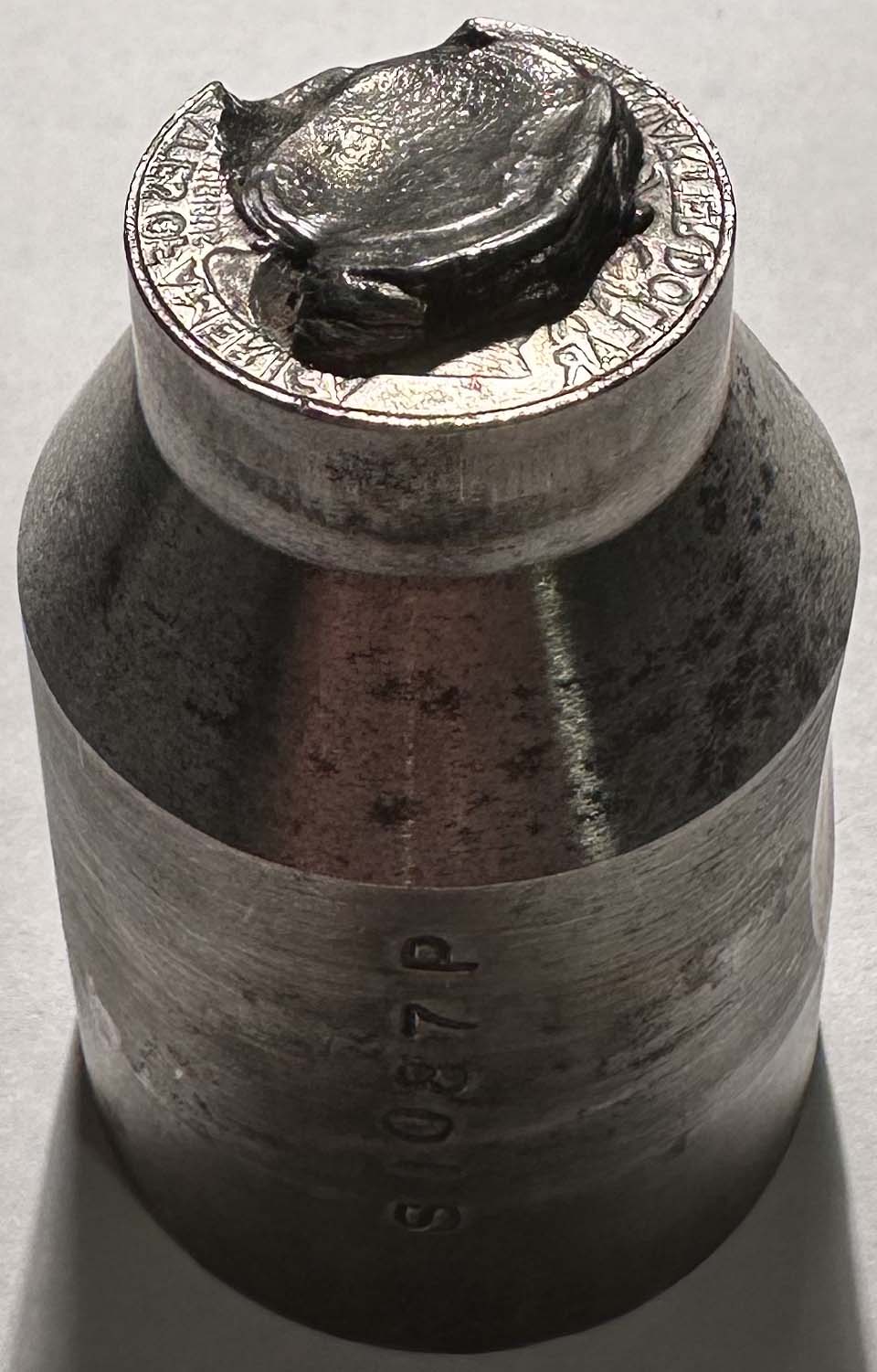
1968-S Roosevelt Dime Obverse & Reverse Dies:
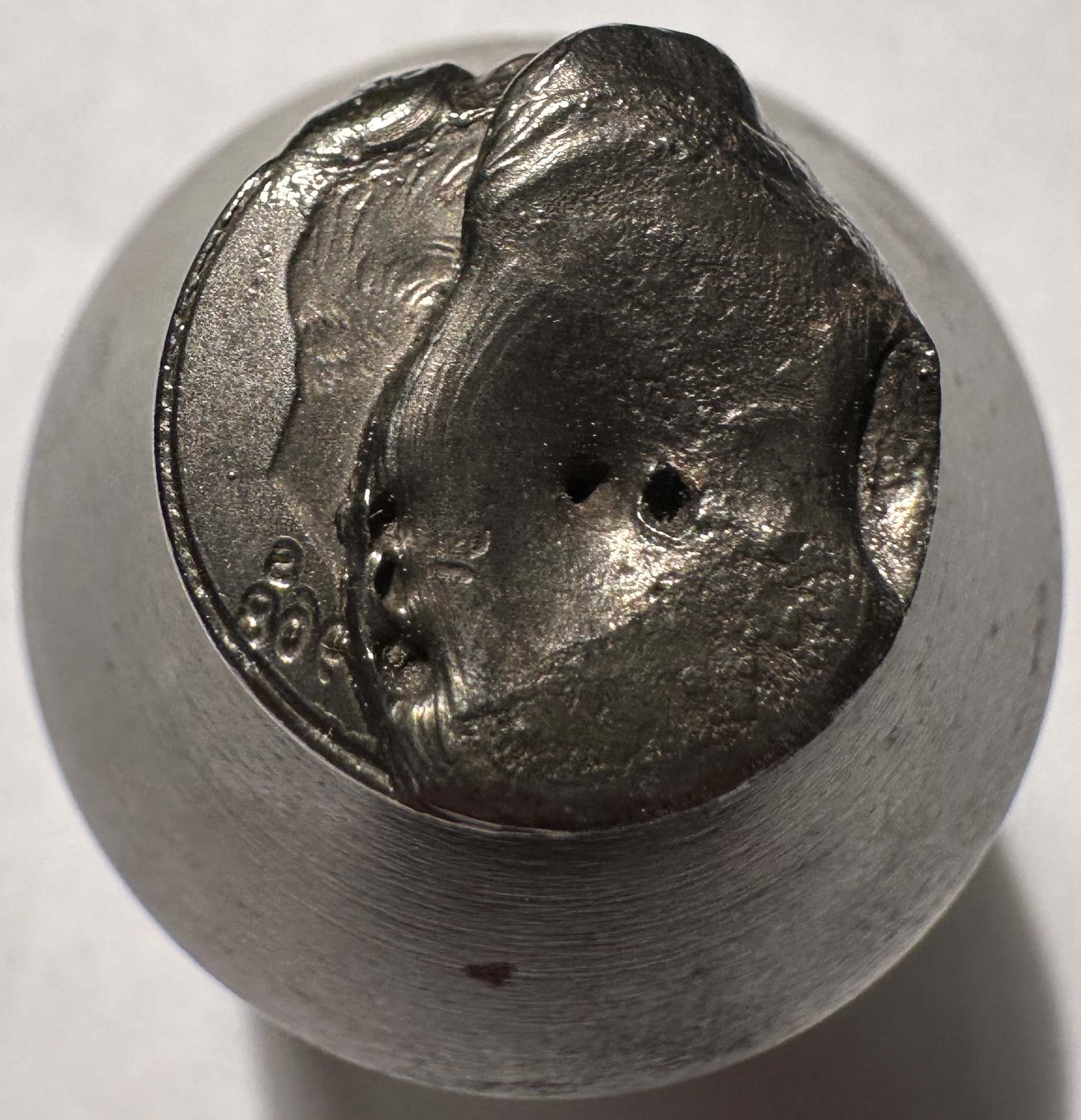
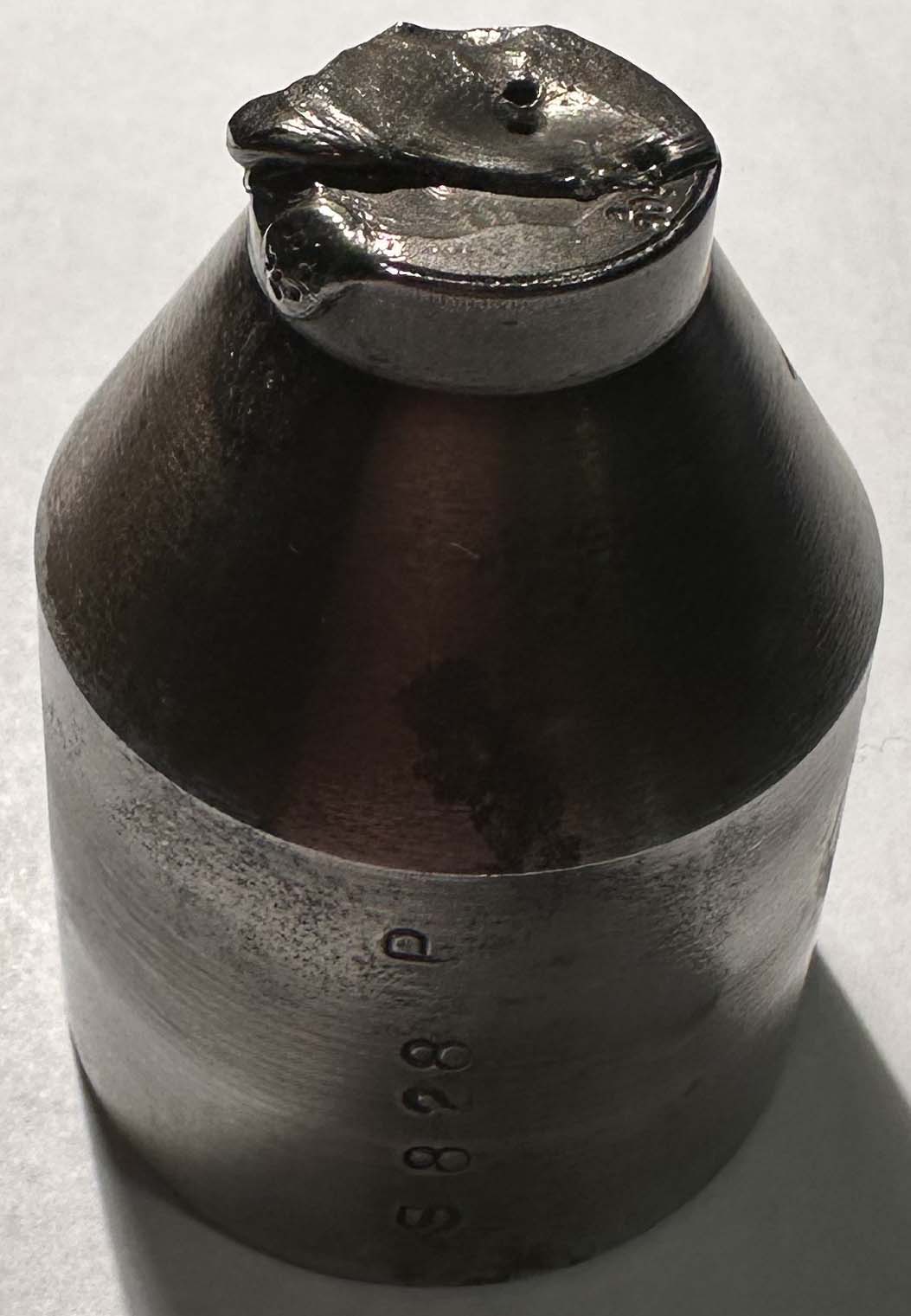
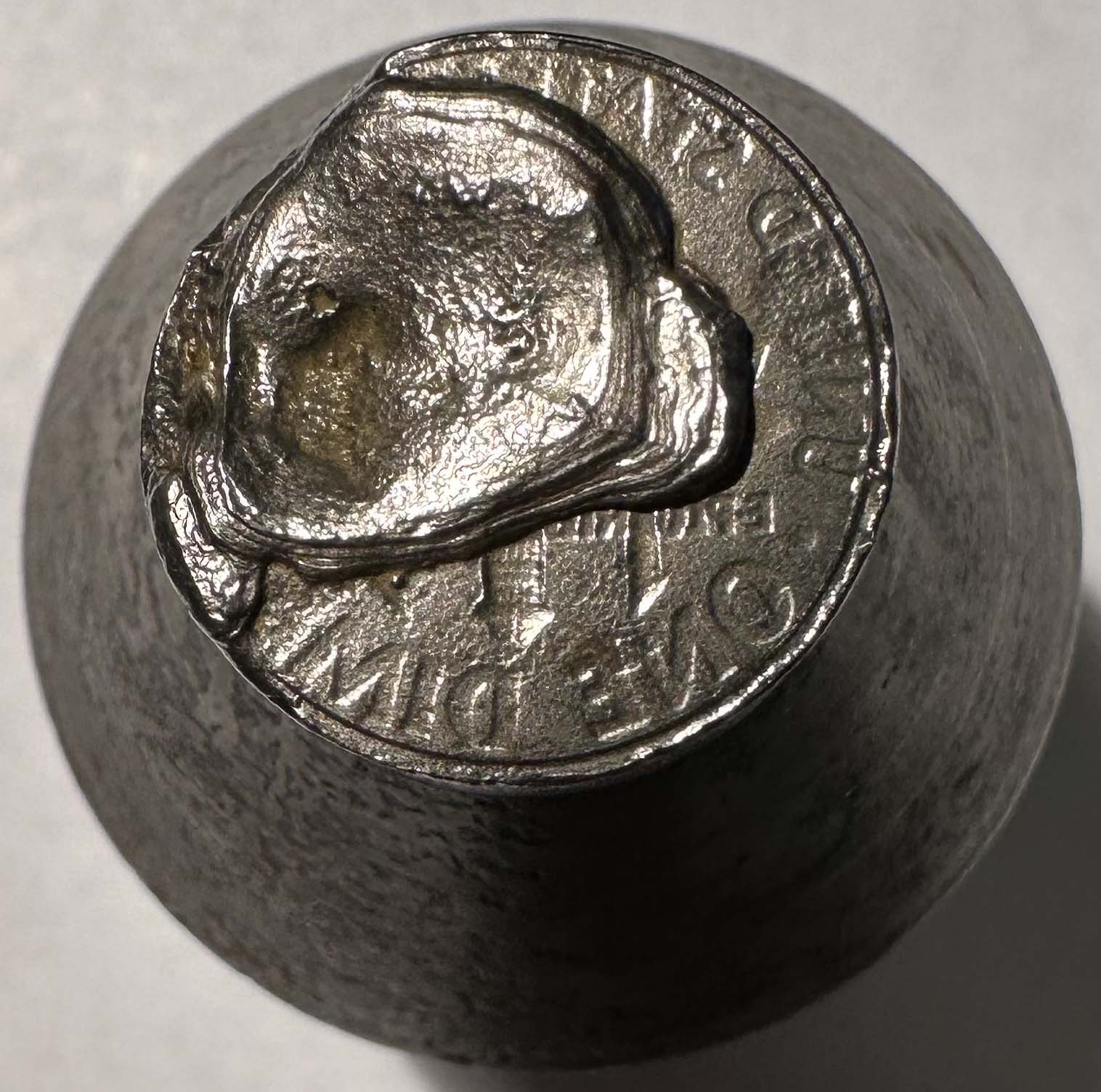
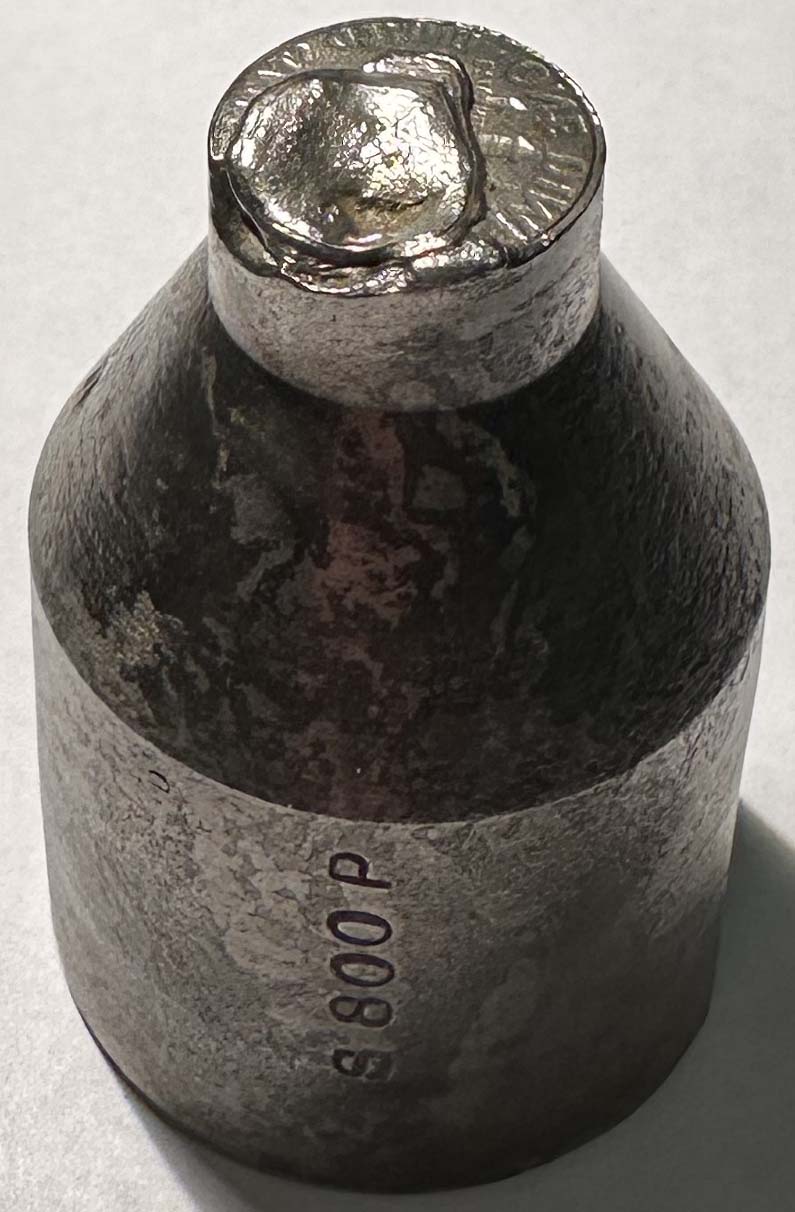
1968-S Jefferson Nickel Obverse & Reverse Dies:
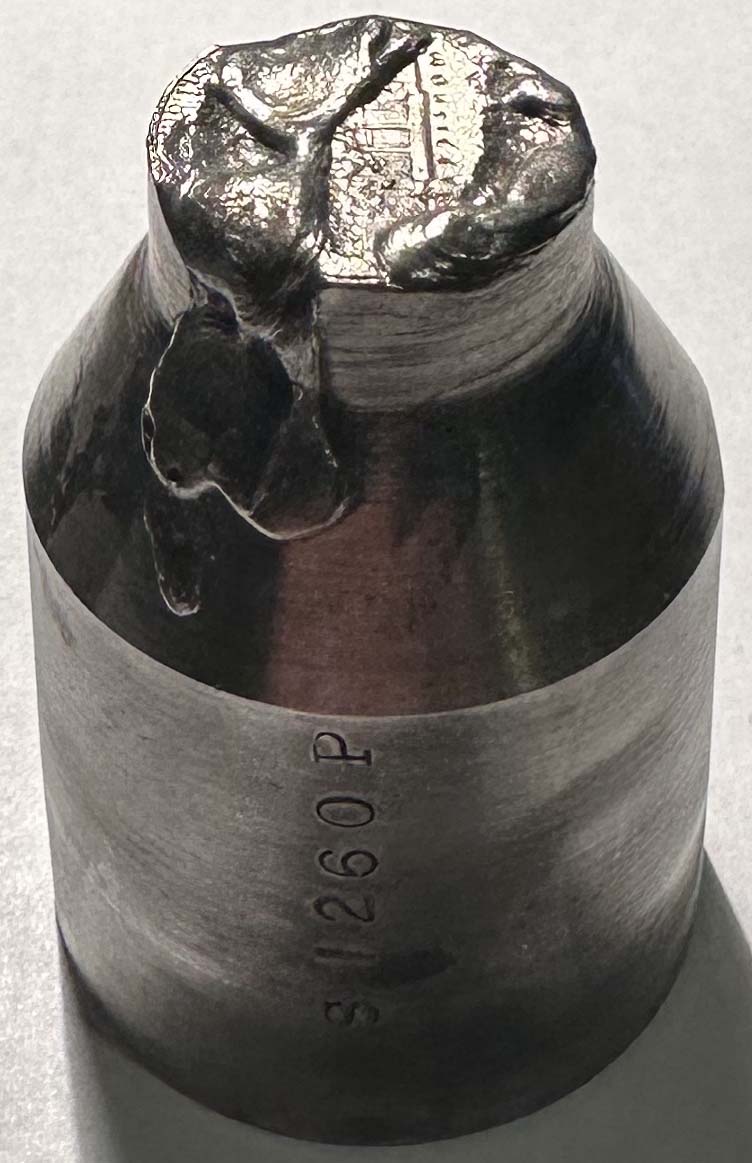
1968-S Lincoln Cent Obverse & Reverse Dies:
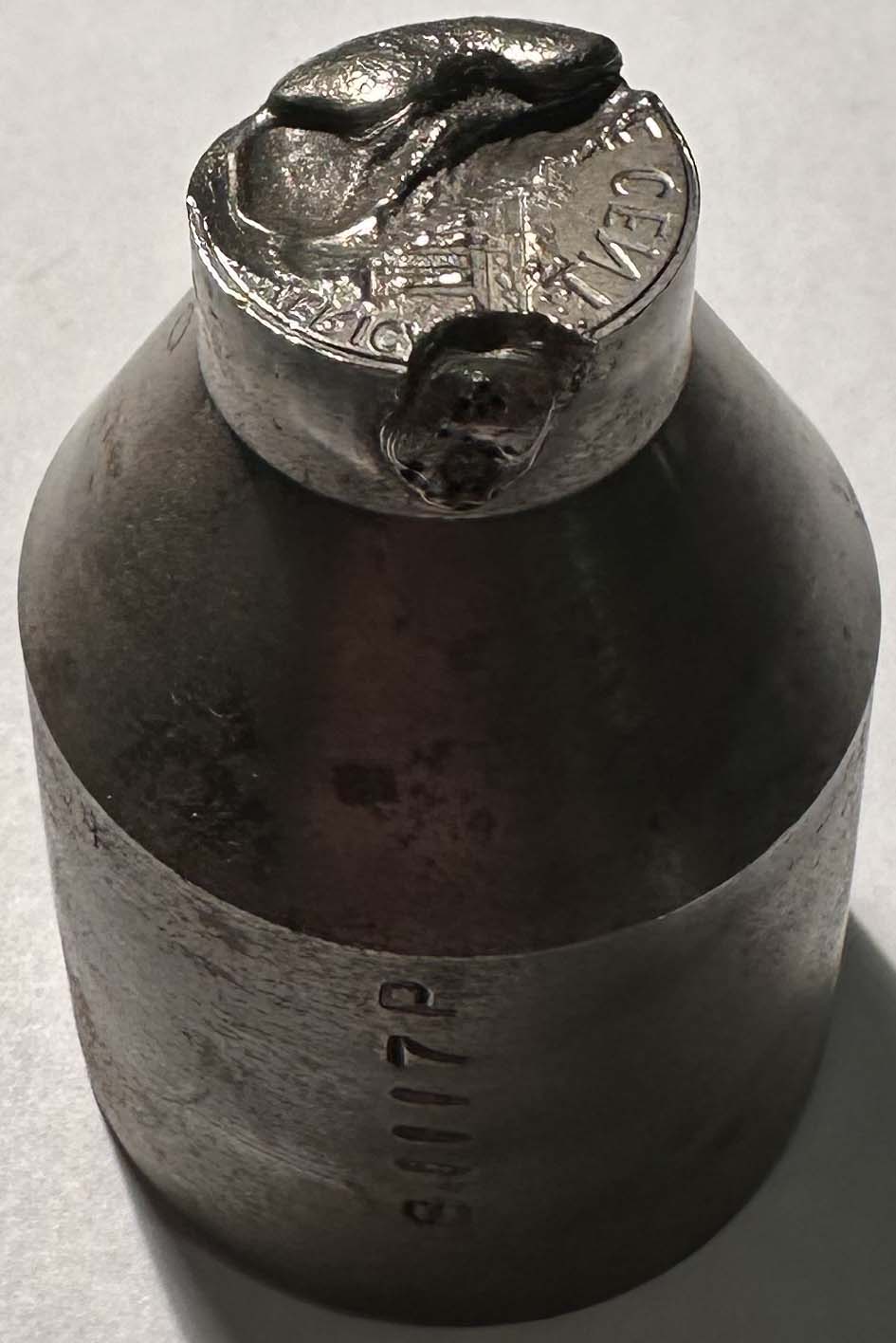
In a Department of the Treasury letter written in 1973, Mary Brooks, the Director of the Mint, describes in detail the sale and destruction of defaced U.S. coin dies:
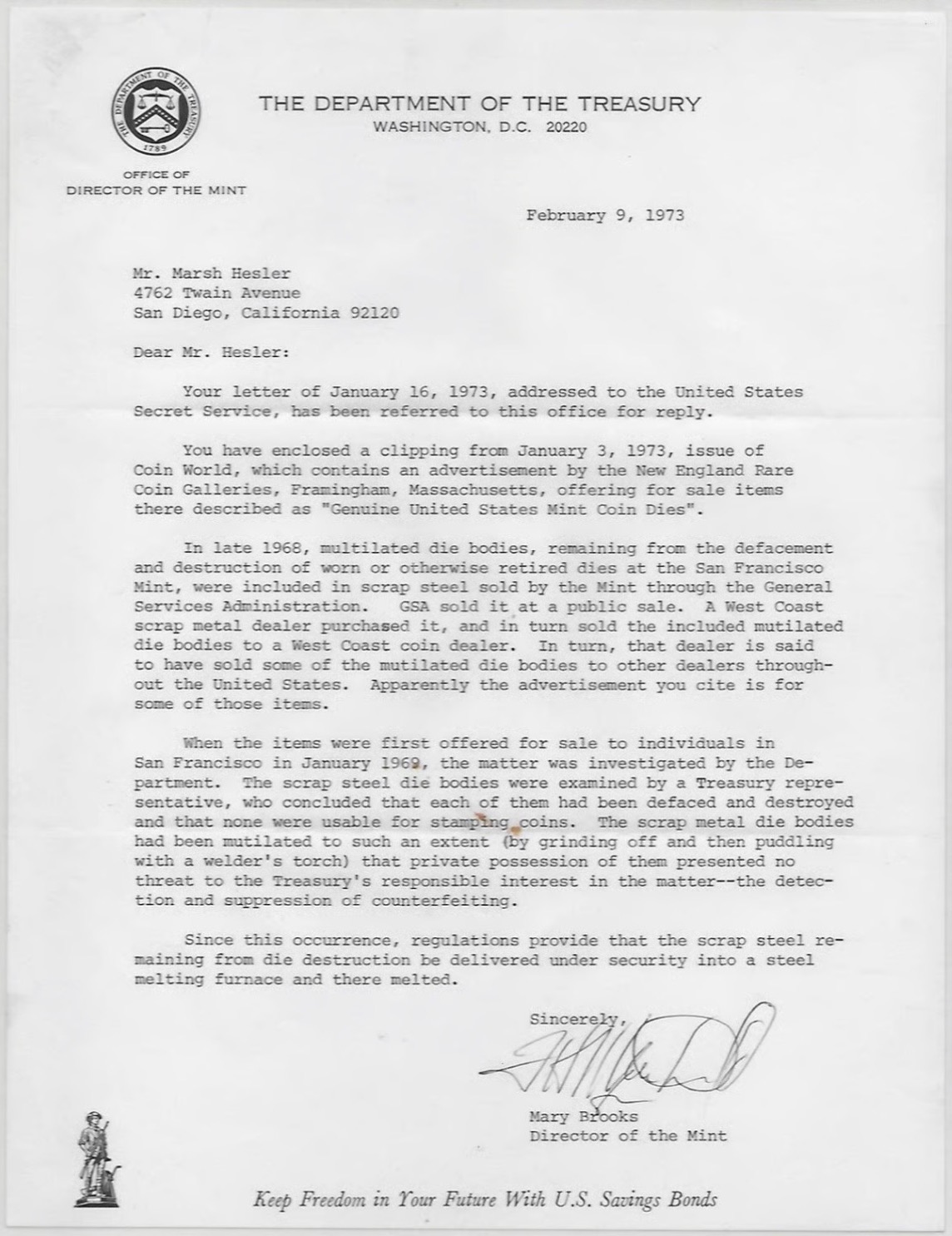
New England Rare Coin Galleries ad offering canceled 1968-S Proof coin dies as published in the October 1974 issue of The Numismatist:
World renowned mint error expert Fred Weinberg describes the three different ways that the U.S. Mint cancelled dies:
- Torched - the face of the die is melted into blobs. Seen most commonly in the 1968-S and some 1969-S dies sold as scrap in the San Francisco area just a year or two after striking coins. The surface looks like lava.
- Defaced - the face of the die is ground off flat. This is the types I purchased directly from the Denver Mint in 1995. There were approximately 20,000 of them, all dated 1994. This is the type currently sold by the Mint in denominations from cents thru state quarters.
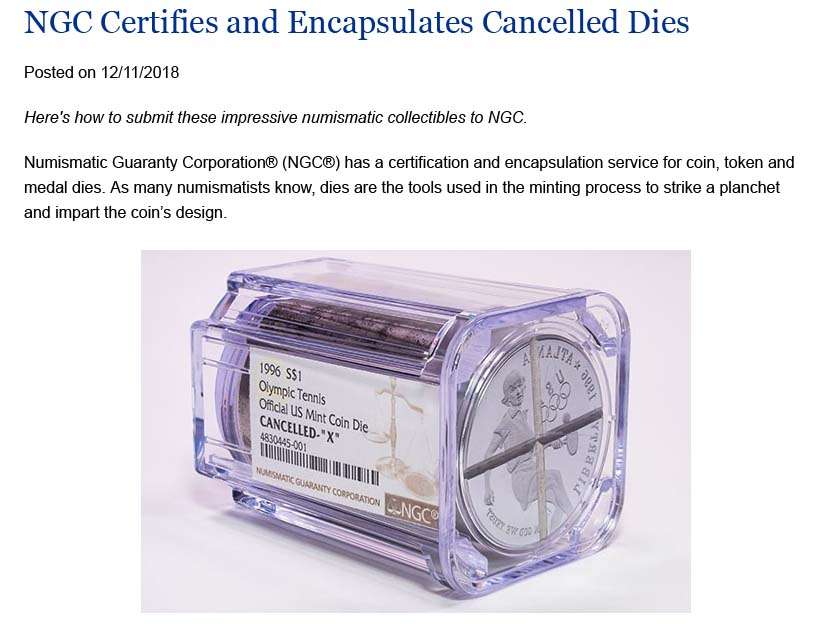
- Cancelled - the face of the die has an X cut across it, leaving four quadrants that show design. Some older U.S. dies, many from the Carson City Mint, have either an X, or sometimes just one line across the die face. This type also includes the popular 1995-1996 Olympic Coin Proof and BU $1 Silver and $5 Gold dies, also sold by the U.S. Mint. According to the Mint, this was a one-time only deal, because the Dies were for Commemorative Coins, not circulation strike coins, and will not be repeated again.
Here is a typical cancelled (torched) die for the 1968-S Jefferson nickel. Notice that it has been completely torched: